


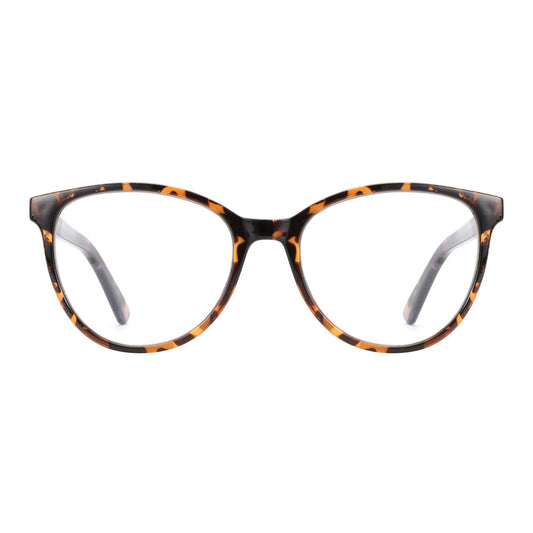

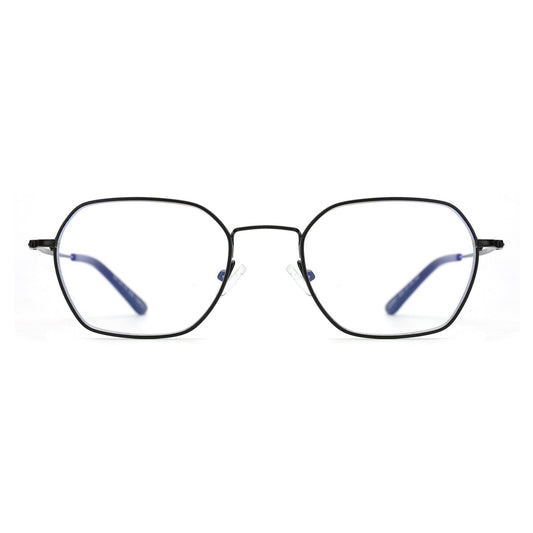

Square vs Browline Frames: Which Eyewear Architecture Balances High Myopia Lenses Better?
No independent optical evidence names square full-rim or browline frames as the better style for hiding a high-minus lens edge. What actually changes the visible edge is the specific frame's eyewire opening and lower-rim construction, plus your prescription power, lens material, and lens diameter. Compare those measurable details on the actual candidates in front of you instead of picking a style label.

Square vs. Browline: What the Evidence Can—and Can't—Decide?
Independent optical sources don't compare square full-rim and browline architecture head-to-head for lens-edge concealment, so no supported winner exists between them. That's not the same as saying the two styles perform equally; it means the comparison hasn't been tested, and each specific frame needs its own check, whether evaluating classic browlines or new stylish glasses frames.
| Candidate style | Construction to verify on the model | What the evidence supports |
|---|---|---|
| Square full-rim | Full acetate rim thickness and depth around the entire lens | No sourced finding that full-rim coverage reduces visible edge thickness versus browline |
| Browline | Upper rim material, lower rim or wire mount, and whether it uses a grooved cord | No sourced finding that browline construction conceals edges better or worse; lower mount varies by model |
Treat a grooved, nylon-corded lower rim as a feature to confirm on a particular browline frame, not a trait every browline shares. Some browline models, including styles across our browline sunglasses collection, use a solid wire rim with no groove at all, so the category name alone tells you nothing about how much lens edge will show.
What Determines a High-Myopia Lens's Visible Edge?
A minus lens used to correct myopia is thinnest at the center and thickest at the edge, and that edge is what a frame either covers or exposes. Three factors drive how thick that edge gets: prescription power, lens material, and lens diameter, as minus lens edge thickness factors dictate.
Stronger minus prescriptions push more edge thickness regardless of frame shape. A higher-index lens material cuts that thickness for the same power, and a smaller lens diameter, meaning a smaller finished lens cut to fit a smaller opening, also reduces it. None of these factors are tied to a square or browline label; they apply to any frame you put the lens into. You can see the same relationship laid out for lens center versus edge thickness in plus lenses too, where the pattern reverses.
Because these three factors operate independently of frame style, a square full-rim frame with a large opening and a low-index lens can show more edge than a browline frame with a small opening and high-index lens, and the reverse is just as possible.
How to Compare Two Frames Before Choosing
Compare the actual eyewire opening on each candidate frame rather than trusting the style name, since opening size is the one measurable factor a frame contributes to minus-lens edge thickness. Work through these steps with the two specific frames you're considering.
- Confirm your prescription power and the lens material you plan to order, since both change the baseline edge thickness before frame choice even enters the picture.
- Measure or check the listed eyewire opening on each frame. For minus lenses, optical guidance links larger eyewire opening edge thickness together directly, recommending fitting the smallest frame that still sits correctly on your face.
- If both frames fit you correctly and use the same prescription and lens material, favor the one with the smaller opening for a thinner-looking edge. This rule only holds when fit, prescription, and material are comparable; a smaller opening on a frame that doesn't fit isn't a usable option.
- Check how frame width and lens shape affect where the optical center lands, since a poor match forces more decentration and a thicker edge on one side. Our guide on frame size and decentration covers this for high prescriptions.
- Look at frame curvature too. A flat frame paired with a strong prescription can cause flat frame base curve mismatch, making the finished lens bulge more than the frame's rim was designed to hide.
- Confirm the actual lower-rim mount on any browline model you're comparing. Verify whether it's a solid wire rim or a grooved nylon-cord mount before assuming either construction.
- If you want a rough number before ordering, an approximate lens-thickness calculator can estimate center and edge thickness from your prescription and frame inputs. Treat the result as an estimate; actual thickness depends on the specific lens and frame you order.

Key Takeaways
- No supported evidence names square full-rim or browline frames as better at hiding high-myopia lens edges; each specific frame needs its own check.
- Minus lenses are thickest at the edge, and prescription power, lens material, and lens diameter all affect how thick that edge gets.
- A larger eyewire opening means a thicker visible edge; among correctly fitting, comparable candidates, the smaller opening shows less lens edge.
- A grooved, nylon-corded lower rim exists on some semi-rimless frames, but it isn't a universal browline feature, so confirm it on the specific model.
- Frame curvature and lens decentration also change how much edge shows, independent of the square or browline label.
FAQs
Can browline frames suit thick prescription lenses?
A specific browline frame can work for a thick prescription, but the browline label by itself doesn't guarantee a concealed edge. What matters is the frame's actual eyewire opening, its lower-rim construction, and how well it fits your prescription and lens material. If the model uses a semi-rimless nylon-cord mount, remember that a grooved cord mount is simply a retention method, not proof the frame conceals the edge better than another style. Check the opening size and mount on the exact frame you're considering before deciding it will suit your prescription.
Does full-rim acetate always conceal high-minus edges better than browline frames?
Not necessarily. While a thicker full-rim acetate bezel surrounds the perimeter of a lens, edge profile depth is primarily driven by total eyewire opening size, prescription power, and lens index. A full-rim frame with an oversized eye size can display noticeably thicker lens edges than a compact browline frame glazed with high-index lenses.
How does lens decentration influence edge thickness in square frames?
If a square frame's optical opening does not align closely with your pupillary distance, the lab must decentrate the optical center of the minus lens. Decentration forces the outer temporal edges of the lens to become thicker, making proper eye centering just as crucial as frame architecture.
