



How to Inspect Cylinder Axis Orientation When Delivered Glasses Cause Tilted Vision
If new glasses make everything look slanted, the cause could be normal adaptation to a changed astigmatism correction, or it could point to a possible cylinder-axis, lens-position, or frame-fit issue that needs professional verification. The symptom alone cannot tell you which one is happening.

The first step is not deciding whether to wait or request a remake. Start by comparing your order records and preserving the glasses exactly as delivered while you watch how the pattern behaves.
Why do my new glasses make everything look slanted?
Astigmatism changes how light focuses inside the eye, and eyeglass lenses use cylindrical power to compensate for that in specific parts of the lens, according to the American Optometric Association. A new or stronger cylinder correction can feel visually different from your last pair even when nothing is wrong with the order.
When adaptation is more plausible
Adaptation is a reasonable possibility when this is your first pair with meaningful astigmatism correction, or when your cylinder power or axis changed noticeably from your previous prescription. The slant should feel broadly similar in both eyes rather than tied to one side. Treat this as a possibility, not a diagnosis, and do not wait for a promised number of days, since no fixed adaptation period is established here. Keep comparing your order details and watching how the sensation changes.
When to request verification sooner
Ask for verification sooner if the tilt feels different in one eye than the other, if the frame looks visibly rotated or uneven, or if the delivered prescription details do not match what you submitted. Distortion that stays exactly the same after a few days of normal wear, or discomfort that is getting worse, also supports a verification request. None of these signs alone proves a lab error. If you notice eye pain, double vision, or a sudden change in vision, that shifts the situation toward an eye-care visit, which the next sections cover.
What do CYL and AXIS mean in a glasses prescription?
CYL and AXIS are two prescription fields that work together to correct astigmatism. You can compare them against your submitted order, but you cannot conclusively verify them by looking through the lens.
CYL: the strength of astigmatism correction
CYL, or cylinder power, is the extra lens power added to correct astigmatism in specific parts of the lens. A bigger change in CYL between your old and new glasses can make the new pair feel noticeably different, even with a correctly made lens. This number by itself does not tell you whether your symptom reflects adaptation or an error, so do not use it to diagnose your own prescription or judge whether the lab did its job correctly.
AXIS: the orientation of that correction
AXIS is the orientation entry tied to your cylinder correction, usually written in degrees on your prescription and order confirmation. You can check that the AXIS number on your delivered order matches what you submitted, but do not try to measure or rotate the lens yourself to confirm it. Learn more about how astigmatism prescription basics work if you want the full picture of how CYL and AXIS appear on an order. A professional needs to verify the finished lens and how it actually sits in the frame, since appearance alone will not confirm alignment.
How to inspect delivered glasses for a possible axis or fit problem
You can safely gather useful evidence before contacting anyone, as long as you observe rather than adjust. This five-step path builds the record a professional will need without risking the lenses or frame.
- Compare your delivered order with your submitted prescription and order confirmation, checking the SPH, CYL, and AXIS entries for each eye against what you originally sent in.
- Look at both lenses and the frame for obvious damage, mismatch, or rotation, without marking, bending, twisting, heating, or removing anything from the glasses.
- Check whether the frame sits level and stable on your face, noting any difference in how the bridge, temples, or lens position feel on one side versus the other. If the frame looks visibly twisted or uneven, write that down and ask for a professional fit check instead of adjusting it yourself.
- Record the symptom pattern by scene and eye: which surfaces look slanted (floors, door frames, screens), whether it happens at distance or up close, when it started, and whether one eye seems more affected. This is a description, not a diagnosis.
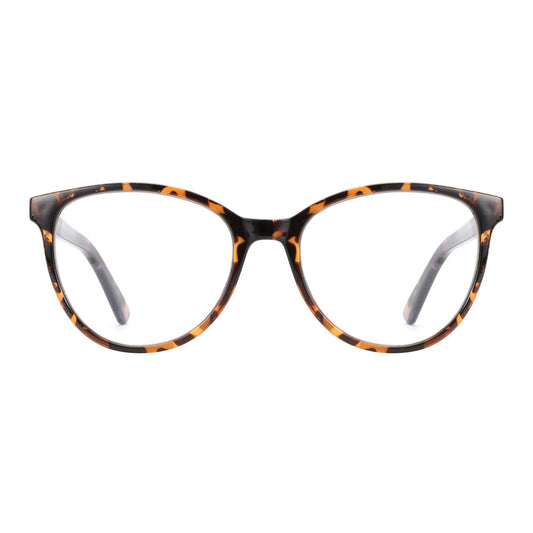
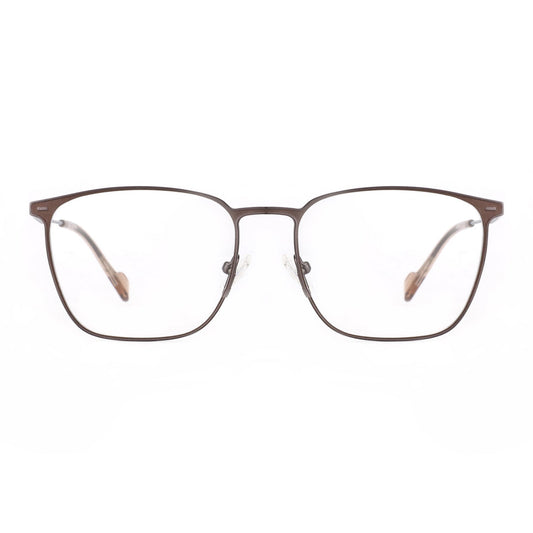
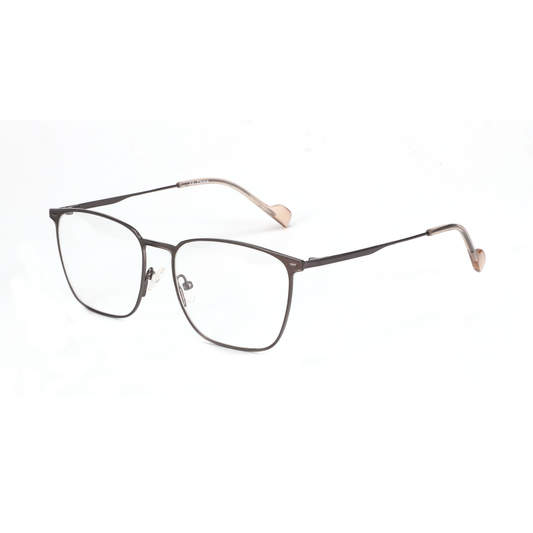
- Photograph the glasses from the front and side, along with your order confirmation and prescription, and keep the original packaging available in case a professional needs to review the pair.
Professional dispensing checks compare the finished spectacles against the written prescription and assess position, fit, and function, a process outlined by the College of Optometrists. For a broader look at how frames should sit day to day, see our guide on how glasses should fit.
When to ask for optical verification or eye-care assessment
The right next step depends on whether the open question is about the glasses themselves or about your eyes. A professional can check the finished product, and a separate professional can examine you; a home inspection cannot replace either one.
Ask for optical and dispensing verification
Request optical and dispensing verification when you have an order mismatch, a suspected CYL or AXIS difference, a lens-position concern, a pupillary-distance or centration question, or a visibly rotated frame. Ask the optician or lab to compare the finished pair against your written prescription and assess its fit, comfort, and function. Frame this as a request for a check, not an accusation, since only that comparison can confirm whether anything is actually off.
Choose eye-care assessment for concerning symptoms
If tilted vision comes with eye pain, double vision, a sudden change in vision, or symptoms that keep getting worse, stop relying on a home inspection and contact an eye-care professional promptly. A comprehensive eye exam and refraction are what determine the correction you actually need, according to the American Optometric Association. Persistent or worsening symptoms deserve a clinical look rather than a seller-only remake claim, since a remake addresses the glasses, not your eyes.
How to request a glasses remake with a clear verification record
A clear evidence packet turns a vague "something feels off" into a request a professional can actually act on. Two pieces make this work: what you gather, and how you phrase the request.
Build the verification packet
Keep your order number, prescription copy, order confirmation, delivery date, the glasses themselves, the original packaging, your photos, and your dated symptom notes together in one place. In the United States, the FTC requires that prescribers provide an eyeglass prescription copy after a refractive eye exam, without an extra fee, so you should already have this record to compare against your order. Keep your notes factual and avoid stating that the lab made an error before anyone has verified it. For a closer look at building this kind of record, see our guide on how to document a frame remake.
Make a precise support request
Ask the recipient to compare your submitted prescription against the finished CYL and AXIS, and to check lens position, pupillary distance or centration, and frame fit. A useful message includes your order number, the date you received the glasses, the exact symptom and whether it affects one or both eyes, a note on whether your order details match your prescription, your attached photos, and a specific request for these checks. Then ask what current remake or return process applies once the review is complete. We want to hear from you if something seems off with your order: reach out to our support team with this packet, and we will walk you through the current verification and service steps for your case.
FAQs
Can I confirm a cylinder-axis error with a phone or printed grid?
A phone camera, printed grid, or visual comparison can help you document how the distortion looks and behaves, but none of these methods can measure cylinder-axis orientation or confirm a manufacturing tolerance. Use them to build your symptom record, then preserve the glasses and request professional verification rather than treating a home test as proof either way.
What if the glasses match my prescription but vision still looks slanted?
Matching numbers on your order do not rule out every possible issue. Ask the optician or lab to check lens position, pupillary distance, centration, and frame fit, since a well-made lens can still feel wrong if it sits incorrectly in the frame. If the sensation persists or is accompanied by pain, double vision, or worsening symptoms, arrange an eye-care assessment rather than pursuing only a remake request.
Does the FTC require a glasses seller to provide a remake?
No. The FTC guidance on prescription copies helps you keep or obtain your own prescribing record so you can compare it against what was delivered, but it does not create a remake obligation for any seller. Whether a remake, return, or another remedy applies depends on the seller's current service policy and the outcome of professional verification.
