



Choosing Frames When Your Right and Left Prescriptions Differ
One pair of unequal prescription glasses can use different values for the right and left eyes. Choose the frame only after comparing the complete OD and OS details, frame geometry, pupil position, lens design, and professional fitting requirements.

What Different Eye Prescriptions Change in Glasses
Unequal prescriptions mean the two eyes need different refractive corrections. This is often called anisometropia. The difference can affect how images are received and how new glasses feel, but a frame cannot diagnose or correct an underlying eye condition. Cleveland Clinic explains anisometropia as a difference in refractive error between the eyes.
The finished lenses may not look or feel identical. Depending on the prescription and lens design, one lens may appear thicker, add more weight, or create a different optical feel. Professional optometry guidance provides cautious background on how refractive changes can relate to magnification, distortion, and adaptation. The result varies by wearer rather than following a reliable prescription cutoff.

Start by comparing the complete OD and OS values, not just the most visible number on the prescription. Sphere, cylinder, axis, add power when applicable, pupillary distance, and the way the frame sits on your face all affect the finished result. If new glasses cause ongoing blur, eye strain, double vision, headaches, or difficulty adapting, ask an eye-care professional to review the prescription, lens position, and frame adjustment.
For background on the abbreviations you may see, use this guide to OD and OS values. It can help you prepare for a fitting conversation, but it cannot determine whether a particular frame is suitable.
Best Frames for Unequal Prescription Glasses
There is no single best frame style for different prescriptions in each eye. Instead, compare frame size, lens geometry, rim coverage, bridge fit, stability, and available lens designs with the actual prescription. Then ask whether the exact frame can be measured and fitted appropriately. Technical optical education on anisometropia also treats lens shape and optical design as prescription-dependent factors, not universal frame fixes.
| Frame characteristic | Why it may matter with unequal powers | What to check before choosing |
|---|---|---|
| Overall and lens dimensions | Lens dimensions can affect the finished lens shape, appearance, and position. | Compare the exact frame width, lens width, bridge width, and height with your fitting measurements. |
| Lens shape and rim coverage | Shape may change where lens edges appear and how much of the lens is visible. | Ask whether the shape and edge coverage suit both prescriptions and the selected lens design. |
| Bridge and fit stability | A frame that shifts can change the position of both lenses relative to the eyes. | Check whether the bridge and temples hold the frame level and stable during normal wear. |
| Lens material and design | Design and material choices interact with prescription power, shape, and the desired optical result. | Ask which options are available for each eye and what tradeoffs affect thickness, weight, or adaptation. |
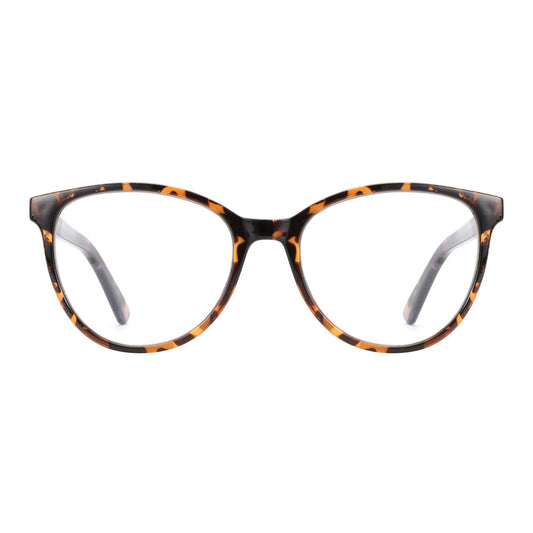
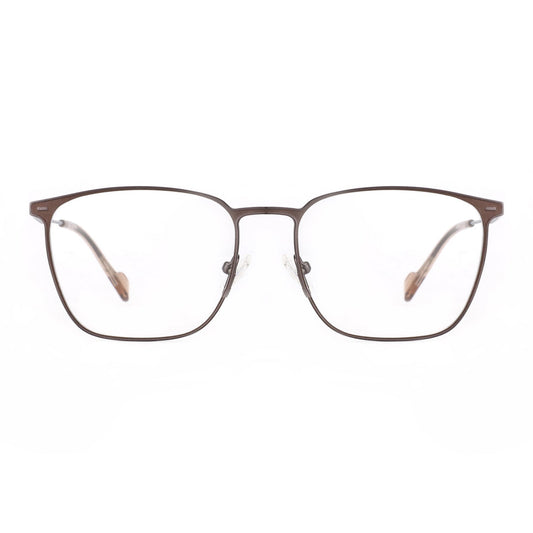
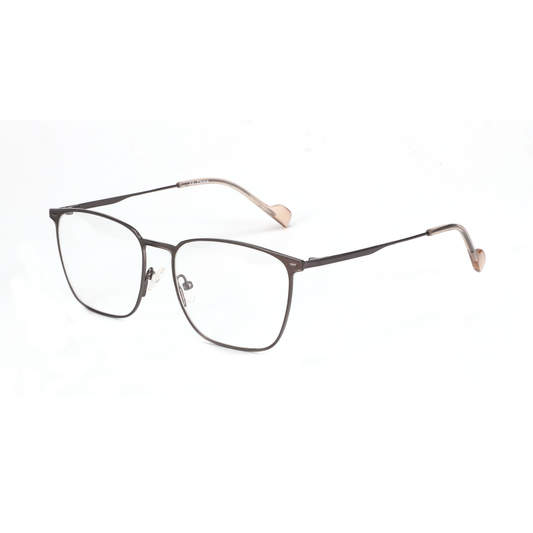
A smaller, rounder, thicker-rimmed, or full-rimmed frame may be worth comparing, but none is guaranteed to solve the challenges of unequal prescriptions. The best frames for different prescriptions in each eye are the ones that work with the complete prescription and can be professionally evaluated—not simply the frames that look smallest in a product photo.
For more general selection criteria, see this guide to strong-prescription frame selection. Treat it as a starting point, not proof that a particular frame will fit your eyes.
Measurements That Control Lens Position
Frame measurements and pupil position need to be considered together. Catalog dimensions can narrow your options, but they cannot confirm optical centering or show exactly where the finished lenses will sit on your face.
Frame Dimensions and Pupillary Distance
Frame width, lens width, bridge width, and PD work together to describe lens placement. A binocular PD gives one combined distance, while monocular PD records each eye separately. That separate information may be more useful when the eyes are not positioned symmetrically within the frame.
Compare the listed dimensions with the way a reference frame fits, but do not use those numbers to approve a prescription on your own. The final pupil position depends on the exact frame, its adjustment, and how it sits on your face. Ask the professional handling the order whether monocular or binocular measurements are needed and how they will be verified in the selected frame.
Fit Stability and Vertex Distance
The frame needs to stay in a consistent position for the lens measurements to remain meaningful. Stability is a separate consideration from whether the frame looks attractive or matches its catalog size. Professional assessment and verification guidance supports reviewing the finished eyewear and its fit individually.
Check these two fit conditions with a professional:
- Stability on the face: The bridge and temples should hold the frame level and prevent avoidable sliding, tilting, or rotation during ordinary wear.
- Consistency of lens position: Discuss pantoscopic tilt and vertex distance, meaning the lens-to-eye spacing, because the frame may sit differently after adjustment than it does in a product image.
Bring a well-fitting reference frame to an in-person appointment when possible. A discussion of lens positioning and frame dimensions is useful preparation, but the actual prescription and finished fit still require individual verification.
Questions to Ask Before Selecting a Frame
Before committing to glasses for unequal prescriptions, show the complete prescription and the exact candidate frame to an eye-care professional. Use this sequence to keep the conversation focused on compatibility, not appearance alone.
- Review the complete prescription. Confirm the current OD and OS values, including SPH, CYL, axis, add power when applicable, and any other fields required for the lens order. If the abbreviations are unclear, read prescription details before the appointment so you can identify missing information.
- Show the exact frame. Ask the professional to evaluate the frame's width, lens shape, rim coverage, bridge, and adjustment range with both prescriptions. Do not substitute a similar-looking frame, because small geometry differences can change lens placement.
- Confirm fitting measurements. Ask whether monocular PD, binocular PD, fitting height, or other measurements are needed for the selected frame and how they will be taken or checked. Catalog dimensions alone do not confirm the finished optical center.
- Discuss lens design and adaptation. Ask which lens materials and designs are available for each eye, what tradeoffs may affect appearance or weight, and what follow-up is appropriate if the new glasses are difficult to adapt to. Request an in-person fitting when the prescription is complex or previous glasses caused persistent problems.
This checklist prepares you for a professional discussion; it does not replace an eye exam, prescription review, or fitting assessment. The key question is whether the exact prescription, frame, measurements, and lens options can be evaluated together.
When an Online Order Needs Extra Confirmation
Online ordering may work for some shoppers, but take extra care when the eyes have different prescriptions. Continue only when the ordering flow can accept separate OD and OS values, the required measurements are reliable, the exact frame can be evaluated for stability, suitable lens options are available, and the seller's current return, remake, and warranty terms are clear.
Before adding a frame to your cart, verify the following in the current ordering flow:
- Separate right-eye and left-eye prescription fields accept every required value.
- Your PD and any other fitting measurements are current and were obtained appropriately.
- The exact frame dimensions and bridge fit are consistent with the frame you intend to receive.
- The available lens design supports the complete prescription for both eyes.
- Current return, remake, adjustment, and warranty terms are easy to find and apply to prescription eyewear.
Pause and seek professional confirmation if measurements are missing or uncertain, the prescription difference is substantial, you previously struggled to adapt, the frame cannot be checked for stable positioning, or the needed lens option is unavailable. Do not infer compatibility from a generic prescription form or assume a collection is suitable for every prescription. Once these conditions are clear, you can browse prescription eyeglasses as a starting point for frame comparison, not as a universal recommendation.
FAQs
Can One Pair of Glasses Have Different Prescription Values for Each Eye?
Yes. One pair can contain separate OD and OS values, so different right- and left-eye powers do not automatically require two pairs. Before checkout, confirm that the prescription is current, every required field is accepted separately, and the selected lens design is available for both eyes.
Does a Large Prescription Difference Always Mean Glasses Will Be Uncomfortable?
No. Comfort depends on the prescription, lens design, frame position, adjustment, and your previous adaptation history. If discomfort continues after reasonable fitting adjustments, ask for a prescription and lens-position review rather than treating it as a style issue.
Will a Smaller Frame Always Make Unequal Prescription Lenses Look More Balanced?
No. Frame size can change lens dimensions and visible edges, but shape, rim coverage, pupil placement, lens design, and fit also matter. Compare the exact frame with both prescriptions before choosing it based on appearance alone.
Should Both Lenses Use the Same Material When the Prescriptions Differ?
Not necessarily. Coordinated materials may be discussed, but the appropriate choice depends on each eye's prescription, optical requirements, lens availability, and the intended frame. Ask which options can be supplied for both eyes and what tradeoffs affect thickness, weight, or optical feel.
Can I Enter Different Right- and Left-Eye Prescriptions in an Online Order?
Sometimes, but a generic form does not prove that the order is compatible with your prescription. Confirm that checkout accepts separate OD and OS values, including cylinder, axis, add power when applicable, PD details, and any other required fields before payment.
When Should I Stop an Online Eyeglasses Order and Ask for Professional Help?
Pause when measurements are uncertain, the prescription difference is substantial, the required lens option is unavailable, prior glasses were difficult to adapt to, or you cannot verify how the frame will sit. A professional review is also the better next step when the seller's current remake, return, or warranty terms do not clearly address your order.
