




How to Buy Kids’ Prescription Glasses Online: A Parent’s Fit and Prescription Checklist
Buying a child's first glasses online gets much easier when you separate prescription details from frame fit. For youth prescription glasses, start with a current eyeglass prescription, confirm the PD, compare actual frame measurements, and let your child help with the final style. When the glasses arrive, check how they sit during normal movement instead of judging fit from appearance alone.
Key Takeaways
- Start with a current eyeglass prescription and enter every value exactly as written.
- Check whether the lens-order form asks for your child’s PD, and confirm the measurement before entering it.
- Compare frame measurements instead of choosing youth eyeglass frames by age alone.
- Narrow the options by fit first, then let your child help choose the color and style.
- Check slipping, pressure, alignment, and lens position as soon as the glasses arrive.
Have a Current Prescription Ready Before You Configure the Lenses
Have your child’s current eyeglass prescription ready before you configure the lenses. You can compare frame shapes, colors, and measurements first, but the prescription values should be entered exactly as written when you move into the lens-selection step.
In the U.S., an eye doctor must provide a copy of the prescription after the refractive exam. Keep that document open while placing the order rather than entering values from memory or copying numbers from an older pair of glasses. Eyeglass prescriptions also have expiration dates that vary by state, so check that the prescription is still valid before ordering.
Depending on the prescription, you may see:
- SPH for the main spherical correction
- CYL and AXIS when astigmatism correction is prescribed
- ADD when an additional near correction is needed
- OD and OS to identify the right and left eyes

Enter plus signs, minus signs, decimals, and right and left eye values exactly as written. Do not substitute a contact lens prescription or estimate a missing number.
For a child's first pair, it is also worth checking whether the eye care professional gave any specific instructions about lens type, wearing schedule, or frame requirements. Those instructions should take priority over general online shopping advice.
Once the prescription itself is clear, the next detail is where that prescription needs to be positioned in front of your child's eyes.
Check PD and Prescription Details Before Entering the Order
PD, or pupillary distance, helps position the prescription correctly in the lenses. After you select the frame and lens option, check whether the order form asks for a single PD or separate values for each eye. If it does, enter the measurement in the format shown rather than changing or estimating the numbers yourself.
The FTC notes that people buying glasses online need a PD measurement, even though whether it must appear on the prescription can depend on state requirements. If your child's PD was measured during the fitting process, use that value and copy the format exactly.
You may see PD written as:
- One total number, sometimes called binocular or single PD
- Two numbers, one for each eye, often called monocular or dual PD
Do not automatically divide, combine, or change those numbers unless the order form specifically tells you how to enter them.
When measuring at home, repeat the measurement and compare the results before entering it. If you cannot get a consistent reading, confirm the value before completing the lens order rather than guessing. Follow the steps for measuring PD at home and repeat the measurement before entering it.
Choose Youth Eyeglass Frames by Measurements, Not Age Alone
Age labels such as "kids," "youth," or "teen" can narrow the search, but they should not determine frame size by themselves. Children of the same age can have very different face widths, bridge shapes, and temple lengths. These are the main measurements to compare:
| Measurement | What It Helps You Check |
|---|---|
| Lens width | How wide each lens opening is |
| Bridge width | How the frame sits across the nose |
| Temple length | How far the arms extend toward and behind the ears |
| Total frame width | Whether the front of the frame suits the child's face width |
| Lens height | How much vertical lens space the frame provides |
These measurements are reference points, not a guarantee that two frames will fit identically. Bridge design, frame shape, and material can make two frames with similar numbers sit differently.

Pediatric fitting guidance also emphasizes current fit rather than buying a frame based only on age. A well-fitting children's frame should sit comfortably, keep the eyes reasonably centered behind the lenses, and avoid resting against the eyelashes or cheeks.
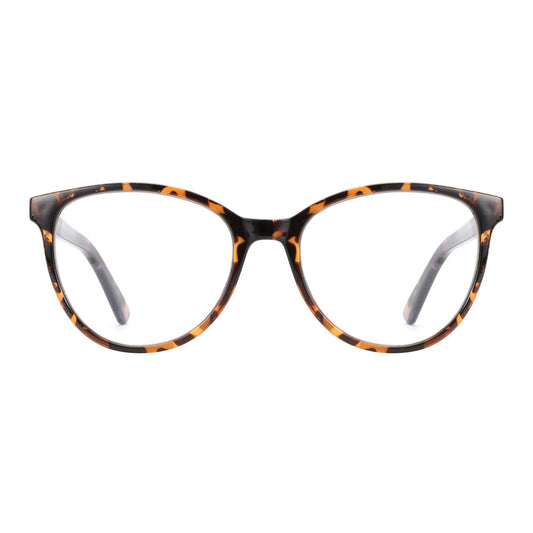
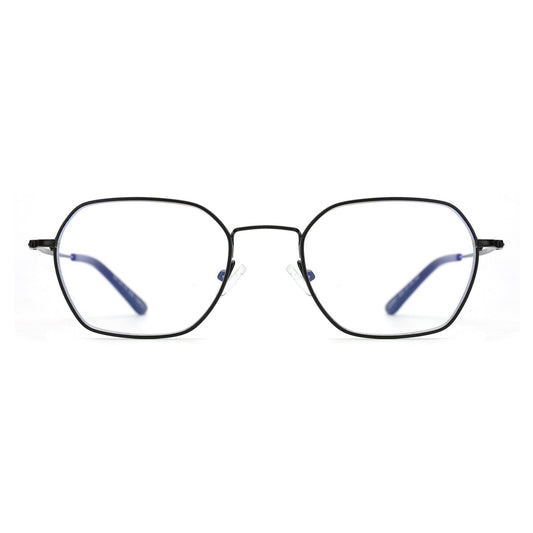
Once you know the approximate measurements you need, compare sizes across the kids glasses collection, then check whether the exact frame supports the prescription and lens options your child needs.
Let Your Child Help Choose a Frame They Will Actually Wear
Parents should handle the prescription and fit requirements, but children can still help choose the final style. Start by narrowing the options to frames that match the needed measurements and prescription, then let your child compare colors and shapes within that smaller group. A simple shortlist can focus on:
- Preferred frame color
- A shape they feel comfortable wearing
- A style that fits school and everyday outfits
- A frame that feels like their own choice
This gives children some ownership without asking them to judge technical fit. If they like a frame that falls outside the target measurements, look for a similar color or shape in a better-fitting size.

Check Fit, Comfort, and Lens Position When the Glasses Arrive
Do not decide that the glasses fit based on one front-facing photo. Have your child wear them for normal quiet activities, then look at the frame from the front and side.
Pediatric guidance on children's glasses fit says frames should fit comfortably, keep the eyes centered behind the lenses, and avoid touching the cheeks or eyelashes. The frame may also need adjustment to sit properly on the child's face.
Use this arrival check:
- Bridge: The glasses should stay centered without repeatedly sliding down.
- Temples: The arms should not visibly press into the sides of the head.
- Ears: Ask whether there is rubbing or pressure behind either ear.
- Cheeks and lashes: The frame should not repeatedly contact them during normal wear.
- Alignment: The glasses should sit reasonably level instead of consistently tilting to one side.
- Lens position: The child's eyes should sit in a sensible position within the lenses.
A young child may not answer "Do these fit?" very clearly. Ask specific questions such as "Does anything pinch here?" or "Do these move when you look down?" Then watch what happens when the child reads, walks, looks down, or turns their head.
For a first pair, do not assume every complaint is simply part of getting used to glasses. Persistent slipping, pinching, crookedness, or pressure deserves a closer fit check. The more detailed glasses fit warning signs can help you separate a frame adjustment issue from a size problem.
Avoid forcing or reshaping the frame yourself when the fit seems wrong. Recheck the frame measurements and contact customer service if you are unsure whether the issue calls for an adjustment or a different size. Also review the current return or remake terms for your exact order before sending the glasses back.
Order With the Measurements That Matter
Buying youth prescription glasses online becomes more manageable when each decision has a clear job. Use the current prescription for the lenses, confirm PD for optical positioning, compare frame measurements for fit, and let your child help with style only after the workable size range is clear. When the glasses arrive, check comfort and stability during normal wear. That process gives parents a much stronger basis for ordering than relying on age labels or product photos alone.
Common Questions About Children's Glasses Fit and Sizing
Q1. Can I Use the Measurements From My Child's Current Glasses?
Yes, if the current frame still fits comfortably. Its lens width, bridge, and temple length can provide a useful starting point for comparing new frames, but recheck the fit because children's facial proportions change as they grow.
Q2. Should I Buy Larger Glasses So My Child Can Grow Into Them?
Usually, the better goal is a frame that fits properly now. An oversized frame can sit less securely and may position the lenses poorly, so future growth is better handled by checking fit again when your child needs the next pair.
Q3. Does My Child Need a Backup Pair of Prescription Glasses?
A backup pair can be useful for children who depend on their glasses throughout the day, especially if the main pair is lost, damaged, or sent for repair. If you order a backup, use the same current prescription unless the eye care professional gives different instructions.
Q4. Can My Child Wear an Adult Frame if the Measurements Fit?
Possibly. The label matters less than whether the frame dimensions, bridge, temples, prescription compatibility, and actual fit work for your child. Compare the measurements carefully and check the frame in normal wear after it arrives.
Q5. How Often Should I Recheck the Fit of My Child's Glasses?
Recheck whenever you notice recurring slipping, pressure, crookedness, cheek contact, or a clear change in how the frame sits. Children grow, so a pair that fit well when purchased may eventually need adjustment or a different size.
