



Understanding Base Curve: Why Flat Frames Ruin High-Prescription Lenses
If you've ever received high-prescription glasses only to see the lenses bulge noticeably beyond the frame edges, the mismatch often traces back to base curve. For wearers with prescriptions around -6.00 or stronger, choosing a frame whose front curvature does not align well with the lens form can make even high-index lenses appear thicker and more prominent than they need to. The right combination of frame geometry, lens index, and size usually delivers a more balanced look, while a flat frame can undermine those gains.

High-index lenses remain one of the most effective ways to reduce bulk for strong minus prescriptions. Materials such as 1.67 and 1.74 can cut center and edge thickness compared with standard 1.50 plastic, yet the final cosmetic result still depends heavily on the frame you pair them with. Frame size, shape, pupillary distance, and the curvature of the front all influence how much edge thickness shows and whether the lens appears to sit flush or protrude.
What Base Curve Actually Means for Eyeglasses
Base curve describes the curvature of the front surface of a lens, typically expressed in diopters ranging from about 2 (very flat) to 10 or higher (more curved). In practice, opticians match this curve to the frame's front so the lens sits naturally without excessive bending or visible edge lift. When the frame is very flat and the lens must be steeply curved to correct high myopia, the finished pair can show an obvious “domed” or protruding effect from the side or front.
This mismatch does not change the prescription power itself, but it can increase perceived thickness and sometimes introduce minor optical distortions near the periphery. For prescriptions near -8.00 and stronger, the effect becomes more noticeable because the lens itself is already thicker at the edges. As this technical guide to high-index lens materials explains, refractive index and lens design interact with frame geometry to determine the final appearance and performance.

Why Flat Frames Often Make High-Prescription Lenses Look Worse
Flat-front frames, especially oversized or low-wrap styles popular in fashion, force the lens into a shallower plane. For a strong minus lens, this can result in the edges standing proud of the frame rim or the lens appearing to bulge outward. The problem grows when the frame eyewire is large because more lens surface is exposed, giving thickness more room to show.
Smaller, moderately curved frames tend to conceal edge thickness better by reducing the lens area and allowing the lens curvature to follow the frame line more closely. This is why many experienced wearers of high prescriptions prefer compact shapes even when they like bold styles. Frame material also plays a supporting role: full-rim acetate or thicker plastic can hide edges more effectively than ultra-thin metal or rimless designs.
Evidence from optical fitting practice shows that lens thickness is not set by prescription strength alone. Frame size and fit measurements, including pupillary distance, significantly affect how thick the finished lenses appear. A mismatched curvature adds to this by making the lens sit less naturally within the frame.
Common Myths About Base Curve and Thick Lenses
Several misconceptions circulate among online buyers. One frequent myth is that matching the frame curvature to the lens base curve will automatically solve cosmetic distortion. In reality, curve matching can improve appearance in some setups, but it is only one factor. Strong prescriptions, lens index, frame size, and accurate centering all influence the outcome.
Another claim suggests a curved frame is always superior for high prescriptions because it hides edge thickness. While curvature often helps reduce visible edge area, the benefit depends on overall dimensions. A large curved frame can still expose thickness, whereas a smaller flat frame may perform acceptably if other variables are optimized.
The most persistent myth is that high-index lenses alone make high prescriptions look thin enough in any frame. Higher-index materials do reduce bulk, but a poor frame choice can still make the result look bulky. High-index performs best when the frame is already lens-friendly.
Finally, many assume that if a frame looks good empty in a store or photo, it will look good once strong lenses are inserted. Finished-lens appearance often differs because high-minus lenses amplify edge visibility and any curvature mismatch that was invisible before edging.
Practical Thresholds and Decision Framework for High Prescriptions
For prescriptions around -6.00 to -8.00 and stronger, several practical boundaries help guide frame selection:
- Frame size: Smaller to medium eyewire dimensions (typically under 50 mm lens width and moderate height) usually limit edge thickness buildup. Larger frames expose more perimeter where minus lenses thicken.
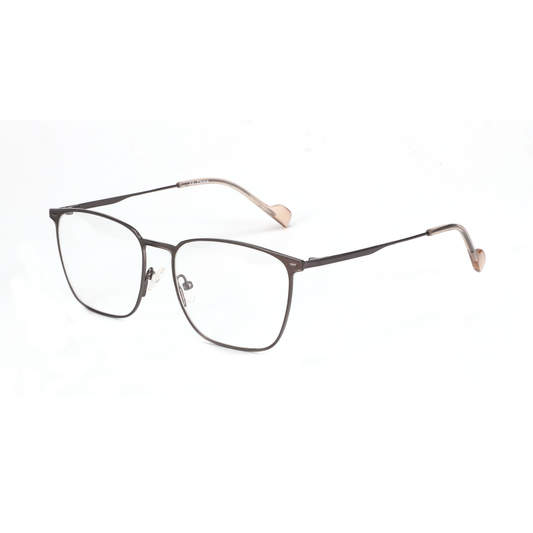
- Front curvature: Moderate wrap or curvature that follows facial contours tends to integrate the lens better than very flat fronts. Extremely flat styles increase the chance of visible protrusion.
- Lens index: At -6.00 and beyond, 1.67 or 1.74 high-index lenses become more relevant because they meaningfully reduce both center and edge thickness. The visual improvement is greatest when paired with compact, curved frames.
- Cosmetic visibility: The clearest sign of mismatch is a lens that appears to dome or sit proud of the frame from the side. Smaller, curved designs generally score higher on everyday appearance.
These are fitting heuristics rather than strict lab cutoffs. Exact results also depend on lens design, pupillary distance, frame tilt, and how accurately the lenses are centered.
Here is an illustrative comparison of how different frame geometries tend to perform with high-prescription lenses:
Frame Suitability for High-Prescription Lenses: Relative Cosmetic Fit by Geometry
Modeled for comparison based on common fitting heuristics; useful for judging frame geometry tradeoffs rather than measuring product performance.
View chart data
| Category | Perceived Bulge Risk | Thickness Visibility | Overall Cosmetic Score |
|---|---|---|---|
| Flat Large | 9 | 8 | 2 |
| Flat Small | 7 | 6 | 4 |
| Curved Medium | 5 | 4 | 6 |
| Curved Small | 3 | 2 | 8 |
Illustrative heuristic model derived from the scenario matrix and threshold table: larger flat frames increase edge exposure and curvature mismatch, while smaller or more curved frames reduce visible bulge for high-prescription lenses around -6 to -8+. Scores are relative planning signals, not measured outcomes.
The chart shows relative tendencies only. Flat large frames tend to score highest on bulge risk and thickness visibility while scoring lowest on cosmetic outcome. Smaller or curved designs generally reverse that pattern. These values are modeled for comparison from common fitting heuristics and should be read as planning guidance.
Don't Buy If… Screening Rules for High-Prescription Frames
To avoid common regrets when ordering online, consider these practical checkpoints before you add a frame to your cart:
- You want the absolute thinnest-looking result and the frame is very flat-fronted or oversized.
- You are highly sensitive to side-profile protrusion and the style leaves a large amount of lens edge exposed.
- You expect the highest-index lens alone to solve appearance issues without considering frame geometry.
- The frame is rimless or ultra-thin metal and your prescription is -7.00 or stronger without additional edge-thinning options.
In these situations, even premium 1.74 lenses may not deliver the refined look you expect. Switching to a more compact, moderately curved full-rim frame often yields better results than simply upgrading the lens index.
Our Ultimate Guide to Ultra-Thin Lenses for -6.00 Prescriptions and Above explores how lens material choices interact with these frame decisions in greater detail.
How to Choose Frames That Help High-Index Lenses Look Their Best
Start by measuring or estimating your ideal frame dimensions. Look for lens widths in the low-to-mid 40s to low 50s mm range when possible. Prefer full-rim designs in acetate or thicker materials that can better mask edges. Moderate curvature or slight wrap helps the lens follow the frame line more naturally.
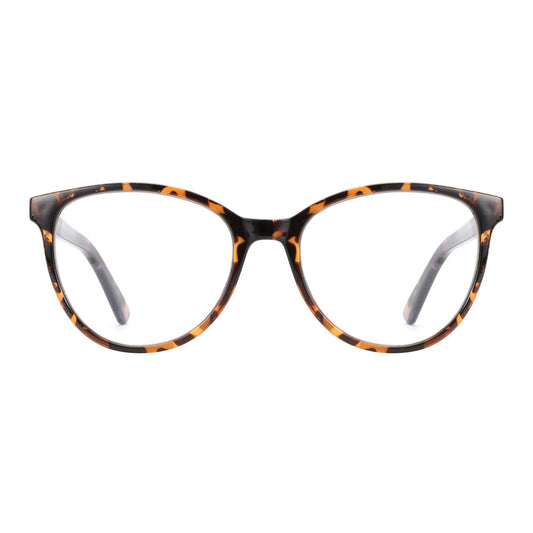
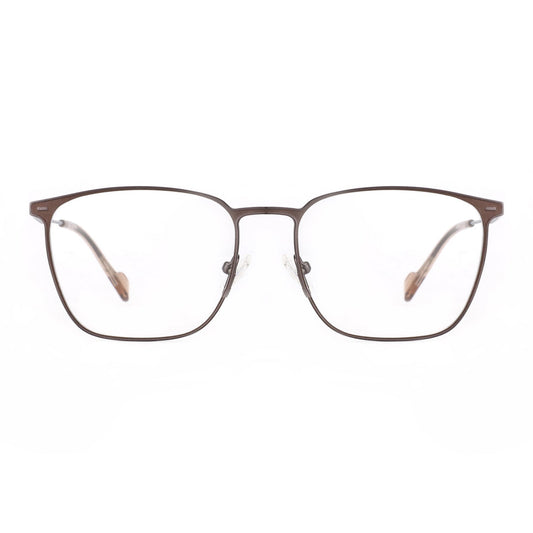
When shopping online, examine product specifications for frame width, bridge size, and any notes on suitability for strong prescriptions. Many Zenottic styles, such as the Hubery and Moore collections, are designed with these considerations in mind and pair well with 1.74 high-index lenses.
Accurate pupillary distance and fitting measurements further improve centering and reduce unwanted thickness on one side. Our guide on How to Order High-Prescription Glasses Online Without Regrets walks through the exact steps to provide your lab with the right data.
For those with narrower pupillary distances, additional care in frame selection prevents decentration that can thicken the outer edges. The article on The Best Frames for High Myopia and a Narrow Pupillary Distance offers targeted recommendations.
If your current glasses feel heavy or slide, combining a well-curved lightweight frame with proper nose-pad adjustment can improve both comfort and appearance. See our tips on How to Stop Heavy High-Prescription Glasses from Sliding Down Your Nose.
Important note on comfort and vision: This article discusses only cosmetic and setup considerations related to frame curvature and lens appearance. It does not constitute medical advice, diagnosis, or treatment. Frame and lens choices affect perceived thickness and fit but cannot replace professional eye care. If you experience persistent discomfort, headaches, visual distortion, or have existing eye conditions, consult a qualified optometrist or ophthalmologist for personalized evaluation.
Balancing All Factors for the Best Outcome
The strongest results usually come from balancing lens index, frame size, curvature match, and accurate measurements rather than chasing any single variable. High-index lenses reduce material thickness effectively, but a thoughtfully chosen frame amplifies that benefit and helps minus lenses look more proportional in everyday wear.
When upgrading from standard lenses or replacing a frame that currently makes your prescription look bulky, prioritize smaller or moderately curved full-rim styles first. Then select the highest practical index that fits your budget. This combination tends to minimize visible edge thickness and protrusion for prescriptions in the -6.00 to -10.00 range while maintaining optical clarity and comfort.
Browse our full selection of eyeglasses or explore acetate frames that often work well with high-index lenses. For men seeking streamlined options, the Men Eyeglasses collection includes several compact designs suitable for stronger prescriptions.
Additional styles such as the Daphne, Catherine, Roxanne, and Marsh frames have been popular among customers with high prescriptions when ordered with 1.74 lenses.
The Best Frames for 1.74 Lenses to Minimize Edge Thickness and When 1.74 High-Index Lenses Are Actually Worth the Upgrade provide further guidance on making cost-effective material and frame decisions.
By paying attention to base curve compatibility alongside size and material, most wearers with strong prescriptions can achieve glasses that look noticeably more refined and feel better balanced on the face. The key is treating frame choice as an equal partner with lens technology rather than an afterthought.
Disclaimer: The guidance in this article is for informational purposes regarding eyewear aesthetics and frame-lens compatibility. It is not a substitute for professional optical advice. Individual results vary based on exact prescription, facial anatomy, lens design, and laboratory processing. Always verify measurements with a qualified eye care professional and seek medical attention for any vision or comfort concerns.
