



Glasses With Bangs: How to Choose Frames That Work With Your Hairstyle
When you wear glasses with bangs, both frame your eyes, so changing your fringe can make the same pair of glasses look completely different. The best eyeglass styles for women depend on how much forehead your bangs cover, where the hair falls around the frame, and how bold each feature looks. Start with fit, then balance frame height, shape, and thickness with the hairstyle you actually wear most often.

Why Bangs Change the Way Eyeglass Frames Look on Your Face
Bangs change how much of your forehead and brow area remains visible. That affects the amount of visual space between your hair and glasses, especially when the fringe sits close to the top rim.
Heavy bangs create more visual weight around the upper face, while wispy or parted bangs leave more open space. A tall or thick frame can look stronger under blunt bangs but lighter under curtain bangs. Neither effect is wrong. The goal is to make the hairstyle and frames look intentional together rather than treating them as separate choices.
Match Blunt, Curtain, and Wispy Bangs With Different Frame Shapes
Different bangs change the outline around your eyes in different ways. Use the table as a starting point, then adjust for your face shape, frame size, and personal style.
| Bang Style | Frames to Consider | Styling Effect |
|---|---|---|
| Blunt or full bangs | Slim rectangles, soft squares, lighter acetate | Keeps the upper face from feeling too crowded |
| Curtain bangs | Round, oval, cat-eye, soft square | The center opening leaves room for more frame shapes |
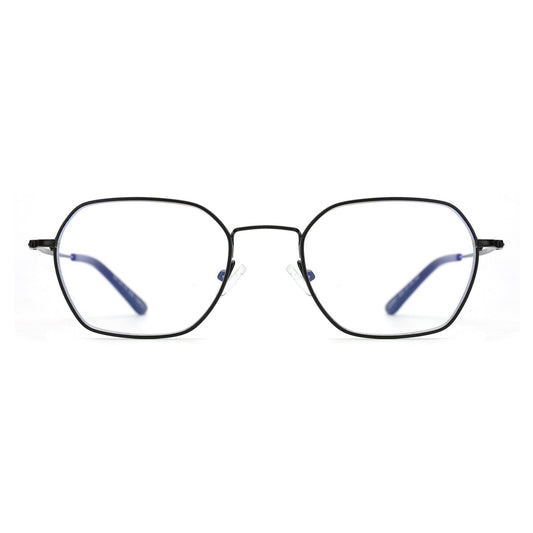
| Wispy bangs | Round, geometric, cat-eye, thin metal | Light fringe allows both delicate and stronger frames |
| Side-swept bangs | Cat-eye, oval, softly angular | Works with the diagonal direction of the hair |
| Short micro bangs | Round, oversized, geometric | More forehead remains visible, giving the frame extra space |
These pairings are not fixed rules. Blunt bangs can still work with bold acetate frames if you want a graphic look, while curtain bangs do not automatically require a soft frame.
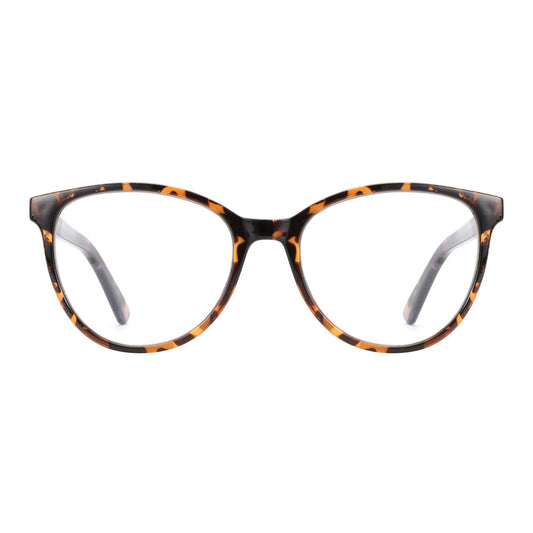
Round eyeglasses for women can be especially flexible with wispy or curtain bangs because the curved frame creates a different line from the hair. With a very straight, heavy fringe, the same round shape creates more obvious contrast, so rim thickness and frame height become more important.
Balance Frame Height With the Amount of Forehead Your Bangs Cover
Frame height matters because bangs and glasses share limited vertical space around the eyes. The lower the fringe sits, the less open space remains between the hairline and the frame.
With thick blunt bangs that reach the eyebrows, a very tall lens can make the upper face look visually dense. Medium-height or slimmer frames often leave more breathing room, while translucent or thin rims can reduce the effect further. If you prefer oversized or bold frames, the combination can still work, but it will become a stronger part of your overall style.
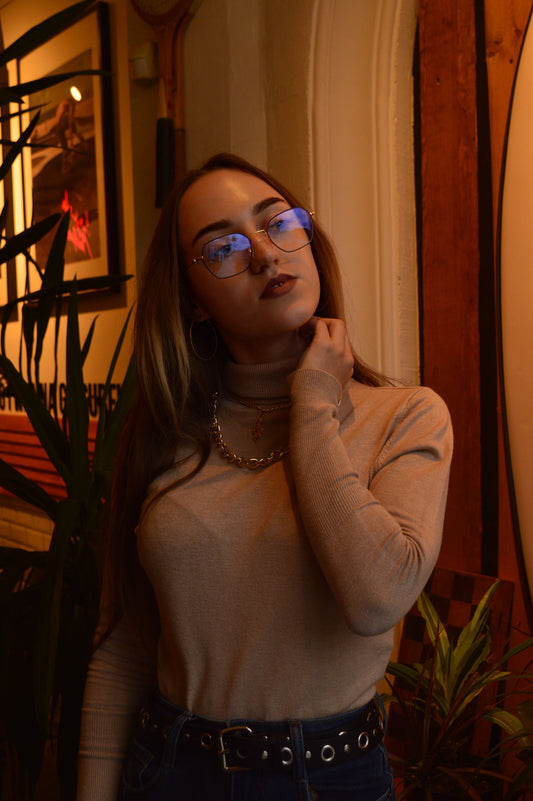
Curtain and wispy bangs give you more flexibility because they expose more of the forehead or allow skin to show through the fringe. Taller lenses, thicker acetate frames, and more noticeable cat-eye shapes can fit into that open space without automatically competing with the hair.
Do not judge frame height from the front photo alone. The bridge position also changes where the frame sits. Two glasses with similar lens heights may occupy different areas of the face if one sits higher on the nose.
When comparing women's eyeglass frames, look at lens height and bridge proportions together with the frame shape. The goal is to leave enough visual space for your eyes to remain the center of the look rather than having the fringe and frame form one heavy band.

Avoid Frames That Compete With Heavy Bangs or Catch Your Hair
Heavy bangs do not mean you need invisible glasses. They simply make rim thickness, color, and frame height more noticeable because several strong lines are concentrated around the same area.
If your fringe is dense and dark, a thick black frame creates a bold, graphic combination. A thin metal, translucent, tortoise, or lighter-colored frame makes the glasses less dominant. Both approaches can work, so decide whether you want the eyewear to blend with the hairstyle or stand out against it.
Practical hair contact matters too. Fine strands or longer side pieces can occasionally catch around exposed nose-pad arms, temples, or hinges. Recent glasses discussions show that hair getting caught around nose pieces and hinges is a real annoyance for some wearers, especially when bangs or shorter face-framing pieces fall near the frame.
If this happens often, check the physical construction when you shop. Frames with smoother bridge areas or less exposed hardware may reduce places where loose strands can catch. Also make sure the frame is the correct width, because poorly positioned temples can sit where your hair naturally falls.
Style matters, but the glasses still need to stay comfortable when you move your head, tuck your hair back, or let the fringe fall naturally.
Use Face Shape and Hairstyle Together When Choosing New Glasses
Face shape remains useful, but bangs change the outline people see. A round face with an open curtain fringe presents different proportions from the same face with a straight, full fringe covering the forehead.
For a round face, angular or softly rectangular frames can add definition, while round frames create a softer effect. If thick bangs already form a strong horizontal line, a slightly lighter rim may keep that combination from feeling too dense.
Square or angular faces often work well with oval, round, or softly curved frames. Bangs can change that balance. Wispy fringe softens the upper face further, while blunt bangs add another straight line, which may make a curved frame more noticeable.
Longer faces can benefit from frames with more lens height, but long or heavy bangs already reduce the amount of visible forehead. In that case, medium-height frames may provide better visual balance than automatically selecting the tallest option.
Oval faces have more flexibility, so the hairstyle may become the more useful deciding factor. Eye care guidance on choosing frames also treats face-shape tips as helpful rather than hard and fast rules, so frame proportions matter more than treating face-shape categories as a formula.
This is also why changing your bangs does not mean you need to replace glasses that already fit well. Look at the complete outline first. A different part, fringe density, or hair length may be enough to change how the same frame appears.
Keep Your Frames and Hairstyle Working Together
Once the frame shape and size fit your face, consider how the glasses interact with your daily hairstyle rather than only how they look immediately after a haircut.
If you switch between bangs and pinned-back hair, select a frame that works in both situations. Medium-weight shapes and neutral or translucent colors are easy to restyle, while bold trendy eyeglasses for women create a stronger fashion statement when your forehead is exposed.
Hair volume also changes the overall scale. Thick, wavy hair with curtain bangs already adds width around the face, so you may prefer frames that stay within your natural face width. Sleeker hair can make the same frame look more prominent.
When looking at popular eyeglass frames for women, use trends as inspiration rather than the final rule. Cat-eye, round, geometric, and rectangular frames can all work with bangs when their proportions suit the space left around your eyes.
The most useful test is simple: wear your hair the way you normally do when comparing frames. A pair that only looks balanced when the bangs are carefully styled may be less practical than one that still works on an ordinary day.
Make Your Frames Work With Your Fringe
The best eyeglass styles for women with bangs come from balancing the hairstyle and frames as one look. Compare fringe density, frame height, rim thickness, and face shape, then check whether loose hair interferes with the bridge, temples, or hinges. Pick a frame that still feels balanced when your bangs move or grow between trims. That gives you glasses that work with your everyday hairstyle rather than only one perfectly styled version of it.
FAQs About Glasses With Bangs
Q1. Should I Bring My Glasses to a Bangs Appointment?
Yes, especially if you wear glasses most of the day. Your stylist can see where the fringe falls relative to the top rim and temples, which makes it easier to select a length that works with both your hairstyle and eyewear.
Q2. Do I Need New Glasses After Cutting Bangs?
Usually not. A new fringe may change how your current frames look, but that does not mean the glasses no longer suit you. Try different parts and styling positions before deciding that the frame needs to change.
Q3. Can I Tuck Curtain Bangs Behind My Glasses?
Yes, if the hair and temples sit comfortably together. Longer curtain bangs can fall outside the frames or tuck behind the temples, but avoid forcing thick sections under tight temple arms if that pushes the glasses out of position.
Q4. Do Oversized Glasses Look Bigger With Bangs?
They can, especially when full bangs reduce the amount of visible forehead around the frame. The effect depends on lens height, rim thickness, hair density, and face proportions, so oversized frames can still work when you intentionally want a bolder look.
Q5. Can I Wear Bangs With Adjustable Nose Pads?
Yes. Nose pads themselves do not prevent you from wearing bangs, but very fine strands can sometimes reach exposed pad arms or nearby hardware. If your hair regularly catches there, compare smoother bridge designs or adjust how the side pieces of your fringe fall.
