


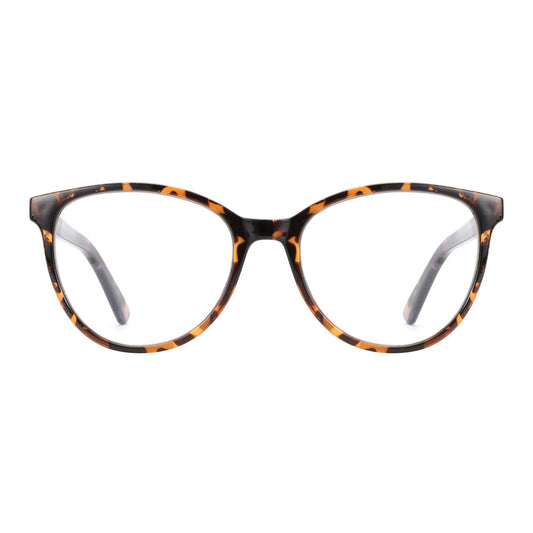

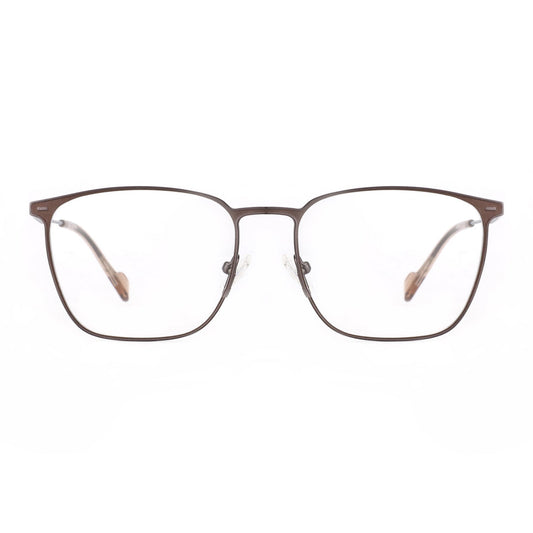
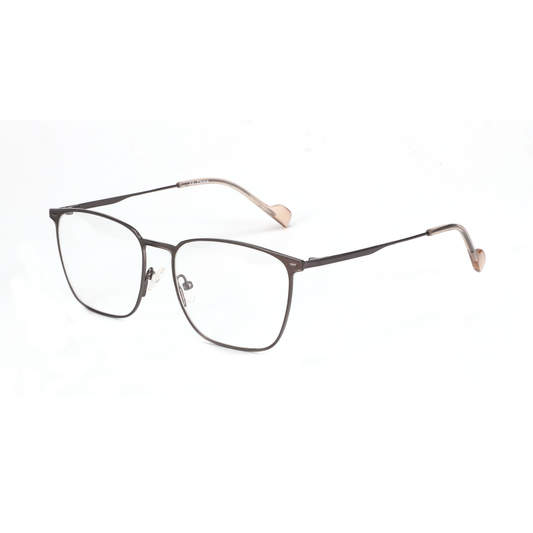
Over-the-Counter Readers vs Custom Prescription Reading Glasses with Astigmatism
Cheap over-the-counter (OTC) readers work well for one narrow case: a simple, equal near-vision need in both eyes. If you have astigmatism, a corneal or lens curve that needs cylinder and axis correction, or your eyes need different prescription strengths, symmetrical drugstore readers will not give you a clear, complete correction. Persistent blur, headaches, or eye strain after wearing OTC readers are signals to verify your current prescription rather than reach for a stronger pair off the shelf.
Key Takeaways
- OTC readers use one shared spherical power in both lenses; they are not built to add the cylinder and axis correction that astigmatism requires (Cleveland Clinic).
- When your right and left eyes need different powers, a single shared OTC strength cannot reproduce both values.
- Custom prescription reading glasses can be built around separate sphere, cylinder, axis, and pupillary distance (PD) values for each eye.
- A confirmed, equal, simple near-power need is the case where OTC readers remain a reasonable, low-cost option.
- Ongoing blur, headaches, or eye strain call for an eye exam rather than another guess at OTC strength.
Can You Use Cheap Reading Glasses If You Have Astigmatism?
The honest answer is conditional: OTC readers can help with plain, equal magnification needs, but they are not designed to correct astigmatism or unequal eye prescriptions. Cheap reading glasses are manufactured with the same spherical power in both lenses, and that design does not change no matter how strong the pair is. According to Cleveland Clinic, that fixed, matched-power design means OTC readers do not correct astigmatism, and if one eye needs a different prescription than the other, cheater readers will not give you the clearest result.
Comfort during a quick task, like reading a menu or a label, is not proof that your correction is complete. It only means the shared power happens to work well enough for that moment. The next two sections break down why a stronger spherical lens cannot substitute for astigmatism correction, and why two different eyes cannot be served by one shared power. A comparison table and a short verification path follow after that.
Why Astigmatism Needs More Than Spherical Reading Power
Reading a prescription gets easier once you separate the main magnification number from the astigmatism correction. Sphere handles overall near power, while cylinder and axis describe a completely different job: correcting an uneven curve in the eye.
What Sphere, Cylinder, and Axis Mean
SPH, or sphere, is the main power on a lens, the number that determines how much magnification you get for near tasks. CYL, or cylinder, is the separate value that corrects astigmatism, and it exists specifically because a uniform curve does not fit every eye. Axis describes the orientation of that curve, so the cylinder correction lines up in the right direction. According to Cleveland Clinic's prescription guide, sphere and cylinder are recorded separately because they solve different optical problems, and one universal correction will not fully address astigmatism on its own.
Why More Magnification Is Not the Same Correction
Choosing a stronger OTC reader increases magnification, which can make text look bigger and closer. It does not add cylinder or axis correction, because that correction is not part of the OTC lens design in the first place. If your prescription includes a cylinder and axis value, a stronger sphere-only lens is solving a different problem than the one your eyes actually have. Readers who want a deeper look at cylinder-specific lens options can review our guide on high astigmatism lenses for how higher-CYL prescriptions are typically handled.

Why Equal Readers Fail When Your Eyes Need Different Powers
Even without astigmatism, one shared OTC power can fall short if your two eyes need different prescriptions. This section explains why, and what to do about it instead of guessing.
OD and OS Are Not Interchangeable
OD and OS are the standard labels for the right eye (oculus dexter) and left eye (oculus sinister) on a prescription, and they are not always the same number. Cleveland Clinic notes that most people actually need a different prescription for each eye, even if the difference is small. Treating OD and OS as one combined value skips real information your eyes need for clear, comfortable focus.
Why One OTC Strength Cannot Split the Difference
Symmetrical OTC readers provide exactly the same power to both eyes by design. If your OD and OS values differ, picking a stronger or weaker shared power does not average out to the correct result for either eye; it simply shifts the mismatch. Cleveland Clinic points out that cheater readers won't give the clearest results when one eye needs a different prescription than the other. If you know your eyes differ, our explainer on different strengths each eye walks through how eye-specific readers are typically ordered.
OTC Readers vs Custom Prescription Reading Glasses
Within this bounded comparison, the deciding factors are astigmatism correction, eye-specific powers, and PD customization, not price or style. The table below lines up what each option can and cannot do for near vision.
| Comparison point | OTC readers | Custom prescription readers |
|---|---|---|
| Power in each eye | Same power, both lenses | Can differ by eye (OD/OS) |
| Astigmatism (cylinder/axis) | Not corrected | Can be built in when prescribed |
| PD (optical center placement) | Fixed, generic fit | Can be matched to your measured PD |
| Best-supported use | Confirmed, equal, simple near need | Astigmatism, unequal eyes, or uncertain vision |
If your near-vision need is simple and equal in both eyes, OTC readers remain a reasonable, low-cost choice for that specific situation. If you have a known cylinder and axis value, unequal OD and OS powers, or you are not sure which case applies to you, that uncertainty is itself a reason to verify your prescription before buying either type of reader.
When to Stop Guessing With OTC Strength
The fastest path forward is to check what you already have, confirm it with a professional, and choose lenses that match, rather than testing stronger OTC pairs one at a time.
Review the Measurements You Already Have
Start with your most recent prescription, if you have one, and look at the date along with the separate OD and OS entries. Note the SPH, CYL, axis, and PD values rather than relying on the printed strength on an OTC package, which reflects only a single shared number.

Match the Lens to the Real Near Task
Tell your eye-care professional what you actually need the glasses for, whether that is books, food labels, a phone screen, or close craft work. That detail, combined with your measured SPH, CYL, axis, and PD, is what allows prescription reading glasses to be built around your real near-vision task instead of a generic average.
Stop Experimenting When Symptoms Persist
Blurry vision, headaches, and eye strain can occur with astigmatism, and the National Eye Institute notes that an eye exam is the only way to confirm whether astigmatism is present. These symptoms do not diagnose astigmatism on their own, but if they continue after you try OTC readers, that is a reason to get your eyes checked rather than buy a stronger pair. Eyeglasses are among the standard treatments once astigmatism is confirmed through an exam.
FAQs
What do OD and OS mean on a reading-glasses prescription?
OD refers to your right eye and OS refers to your left eye. When you order any reading glasses, keep these values separate rather than averaging them, since Cleveland Clinic notes that most people need a different prescription for each eye.
Can I use OTC readers for an occasional short task if they feel comfortable?
Feeling comfortable during one brief task, like checking a label, does not confirm that astigmatism or unequal eye powers are corrected. Treat comfort as a convenience signal, not a substitute for a prescription check, especially if you plan to rely on the same readers for longer or more frequent near work.
What should I check before ordering prescription reading glasses online?
Use your current prescription and keep the OD and OS values separate rather than combined. Confirm your PD and describe your main near-vision task, such as reading or screen use, so the lenses are matched to your measured needs before you submit an order.
When should blurred near vision prompt an eye exam instead of stronger readers?
If blur, headaches, or eye strain continue after trying OTC readers, that pattern calls for an eye exam rather than another strength change. The National Eye Institute identifies an eye exam as the way to confirm astigmatism, since these symptoms alone do not point to one specific cause or lens power.
