



Managing Edge Distortion in Ultra-High Prescription Lenses: A Technical Guide
Summary
Managing edge distortion in ultra-high prescription lenses requires a multi-faceted approach that balances material science, advanced lens geometry, and precise frame selection. By utilizing 1.74 high-index materials, aspheric or atoric designs, and smaller frame dimensions, users can significantly minimize the "fishbowl effect" and peripheral blur, ensuring a more natural visual experience and improved aesthetic profile.
Key takeaways
- Prismatic Deviation: Peripheral distortion is primarily caused by light bending more aggressively at the thicker edges of high-power lenses.
- Material Selection: 1.74 high-index lenses offer the thinnest possible profile for strong prescriptions, though they require high-quality anti-reflective coatings to manage lower Abbe values.
- Advanced Geometry: Aspheric and atoric lens designs flatten the lens profile and reduce peripheral power errors compared to traditional spherical lenses.
- Frame Optimization: Smaller, rounded frames are superior to large or rectangular shapes because they cut away the thickest, most distorted parts of the lens blank.
- Digital Surfacing: Modern free-form manufacturing allows for point-by-point optimization, tailoring the lens to the wearer’s specific frame fit and pupillary distance.
Understanding the Physics of Peripheral Distortion
When dealing with ultra-high prescriptions—typically defined as those exceeding +/- 8.00 diopters—the physical properties of light as it passes through a lens become a significant challenge. This phenomenon, often described by patients as a "fishbowl effect" or "swimming" sensation, is technically known as peripheral distortion. It occurs because the refractive power of a lens is not uniform across its entire surface when viewed from various angles. As the eye rotates away from the optical center, light enters the lens at an oblique angle, leading to prismatic deviation.
For those with high myopia (nearsightedness), the edges of the lens are significantly thicker than the center, causing objects in the periphery to appear smaller and "compressed." Conversely, high hyperopia (farsightedness) results in a thicker center and thinner edges, creating a magnifying effect that can make the world appear to "bulge" outward. Understanding these foundational concepts is the first step in correcting them. For a deeper dive into the nature of these refractive errors, our guide on Myopia & Hyperopia: What They Are and How to Correct Them provides essential context for how these conditions necessitate complex lens solutions.
Logic Summary: The "fishbowl effect" is an inherent optical byproduct of high-diopter lenses where the prismatic power increases toward the periphery. This guide assumes a standard vertex distance of 12-14mm; variations in fit can exacerbate or alleviate these effects.
Material Science: The Role of Refractive Index and Abbe Value
The choice of lens material is the most critical decision for managing edge thickness and the resulting distortion. In the world of high-power optics, the refractive index is the measure of how efficiently a material bends light. A higher index allows the lens to be thinner and flatter while maintaining the same corrective power.
Currently, 1.74 Super High-Index represents the pinnacle of organic lens technology, offering up to a 50% reduction in thickness compared to standard plastic. However, this thinning comes with a technical trade-off: the Abbe value. The Abbe value measures a material's chromatic aberration—the tendency of light to disperse into its constituent colors. Materials like 1.74 have a lower Abbe value (typically around 32-33), which can cause "color fringing" at the very edges of the lens.
To mitigate this, optical engineers rely on the latest manufacturing standards. As detailed in our Technical Guide to High-Index Lens Materials and Standards, which covers the MR™ series polymers and compliance with ANSI Z80.1-2025, the integration of advanced thiourethane resins helps maintain structural integrity and optical clarity even in ultra-thin profiles. For users who may not require the extreme thinning of 1.74, a 1.67 High-Index lens offers a higher Abbe value (around 36), providing a balance between thickness and peripheral color clarity.

Lens Design: Aspheric, Atoric, and Digital Surfacing
Traditional lenses are "spherical," meaning their front surface has a constant curve like a slice of a ball. While simple to manufacture, spherical lenses are notorious for creating peripheral distortion in high prescriptions because the curve becomes too steep at the edges.
Aspheric Design
Aspheric lenses utilize a complex, non-spherical front surface that gradually flattens toward the edges. This design accomplishes two things: it reduces the "bulge" of the lens, making it more aesthetically pleasing, and it significantly reduces the peripheral power errors that cause the fishbowl effect. By flattening the edges, the lens brings the peripheral focal points closer to the retina, resulting in a wider clear field of vision.
Atoric Design and Astigmatism
For patients with significant astigmatism (high cylinder values), standard aspheric designs may not be enough. This is where atoric lenses come into play. While an aspheric lens optimizes one meridian of the lens, an atoric lens optimizes both the sphere and cylinder powers independently across the entire surface. This is particularly effective at reducing the "swimming" sensation experienced when moving the head side-to-side.
Digital Free-form Surfacing
In 2026, the gold standard for ultra-high prescriptions is digital free-form surfacing. Unlike traditional tools that grind a lens to a fixed template, digital surfacing uses computer-controlled lathes to map the prescription onto the back surface of the lens point-by-point. This allows for "position-of-wear" compensations, where the lens design is adjusted based on how the frame actually sits on your face—accounting for the distance from your eye (vertex distance) and the angle of the frame (pantoscopic tilt).
Logic Summary: Aspheric designs are recommended for any prescription over +/- 4.00D. Atoric designs are specifically prioritized for cylinder (CYL) values exceeding 2.00D to ensure peripheral clarity in both axes of vision.
Strategic Frame Selection: The "Golden Rules"
Even the most advanced lens design can be undermined by a poor frame choice. For ultra-high prescriptions, the frame acts as the "aperture" for your vision. The goal is to select a frame that allows the optician to use the central, most optically perfect part of the lens blank while cutting away the distorted edges.
- Minimize Eye Size (The A-Measurement): Every millimeter added to the width of the lens increases the edge thickness exponentially. Keeping the eye size under 50mm is a common heuristic for prescriptions above -8.00D.
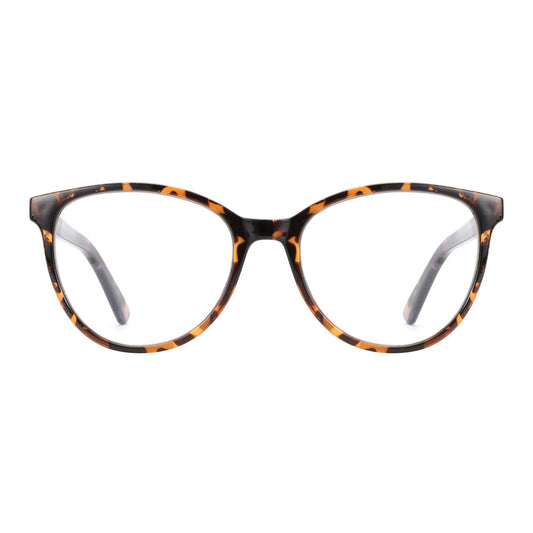
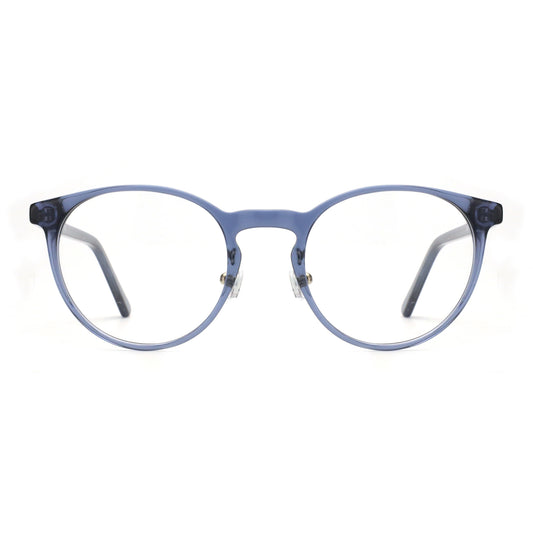
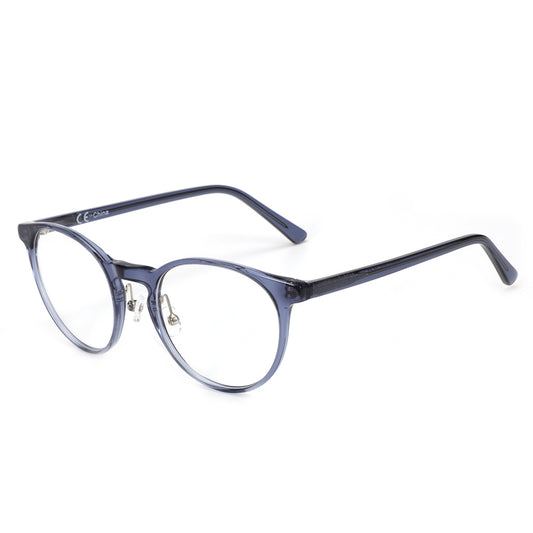
- Prioritize Rounded Shapes: Rectangular or "cat-eye" frames have sharp corners that extend far from the optical center. These corners are where the most thickness and distortion reside. Round, oval, or soft-rectangular shapes result in a more uniform edge thickness and less "cut-out" waste.
- Optimize the Bridge (DBL): A proper bridge fit ensures your pupils are centered within the lens. If the frame is too wide and your eyes are positioned toward the inner corners, the outer edges will be unnecessarily thick and distorted.
- Effective Diameter (ED): This is the measurement of the widest part of the lens. A low ED is essential for minimizing the "minimum blank size" (MBS) required, which directly correlates to a thinner finished product.

Optimization Checklist for Ultra-High Prescriptions
The following table outlines the recommended parameters for optimizing vision in prescriptions exceeding -8.00D or +6.00D.
| Parameter | Recommendation | Primary Benefit |
|---|---|---|
| Refractive Index | 1.74 High-Index | Maximum thickness reduction and weight savings. |
| Lens Geometry | Atoric / Digital Free-form | Minimizes peripheral power error and "swimming." |
| Frame Shape | Round or Oval | Eliminates thick corners and reduces distortion. |
| Eye Size (A) | < 48mm - 50mm | Directly reduces edge volume and prismatic effect. |
| Anti-Reflective | Premium Multi-layer | Essential for 1.74 to offset lower Abbe values. |
| Centration | Accurate PD & OC Height | Ensures the eye looks through the optical center. |
Logic Summary: These recommendations are based on the "Minimum Blank Size" (MBS) principle. By reducing the frame area, we utilize the most stable portion of the lens material, where the refractive index and Abbe value are in the most favorable balance.
Comparing High-Index Options
When deciding between materials, it is helpful to understand where each sits on the spectrum of performance. While we have focused on 1.74, many users find that 1.67 or even 1.61 materials provide a better balance of cost and performance depending on their specific diopter range.
- 1.61 High-Index: Best for moderate prescriptions (-3.00 to -5.00). It offers excellent clarity with a high Abbe value.
- 1.67 High-Index: The "workhorse" of high prescriptions. It is significantly thinner than standard plastic and is highly compatible with most frame types.
- 1.74 Super High-Index: Reserved for ultra-high prescriptions where thickness and weight are the primary concerns.
For a side-by-side breakdown of the two most popular choices, see our comparison of 1.67 vs 1.74 High-Index Lenses: Which is Best for You? to determine which material aligns with your lifestyle and budget.
Adaptation and Troubleshooting
Even with the best technology, transitioning to ultra-high prescription lenses with aspheric or digital surfacing requires an adaptation period. Your brain has likely spent years compensating for the distortions in your previous glasses. When those distortions are removed or changed, the world may feel "too sharp" or slightly tilted for a few days.
Tips for Successful Adaptation
- Consistent Wear: Wear your new glasses first thing in the morning when your eyes are fresh. Avoid switching back and forth between your old and new pairs.
- Head Movement: Practice moving your head rather than just your eyes when looking at objects in your periphery. This keeps your line of sight closer to the optical center.
- Verification: If the "swimming" sensation persists after 7-10 days, have your optician verify the "Position of Wear" measurements. A slight adjustment to the frame's pantoscopic tilt or vertex distance can often resolve peripheral blur.
FAQ
What exactly causes the "fishbowl effect" in strong glasses? The fishbowl effect is caused by prismatic deviation, where light bends more at the edges of a high-power lens than at the center. In negative lenses (for nearsightedness), this creates a minifying effect that makes the periphery look "squeezed," while positive lenses (for farsightedness) create a magnifying "bulge."
Is 1.74 high-index always the best choice for high prescriptions? While 1.74 is the thinnest material, it is not always the "best" for everyone. Because it has a lower Abbe value, some users are sensitive to the chromatic aberration (color fringing) it can produce. If your prescription is around -6.00D, a 1.67 index might provide better peripheral clarity with only a negligible increase in thickness.
How do aspheric lenses reduce edge distortion? Aspheric lenses use a non-spherical surface curvature that gradually flattens from the center to the edge. This flatter profile reduces the prismatic power at the periphery, which minimizes the magnification/minification differences that cause distortion.
Can I wear rimless or semi-rimless frames with a -10.00 prescription? Technically yes, but it is rarely recommended. Rimless frames leave the thick edges of high-index lenses exposed, which can create "power rings" (reflections within the lens edge) and increase the risk of chipping. A full-rim acetate frame is much better at hiding edge thickness and providing structural support.
Why do I see rainbows or color fringes at the edge of my high-index lenses? This is known as chromatic aberration, and it occurs because different wavelengths of light bend at slightly different angles. It is more common in high-index materials like 1.74. Using a high-quality anti-reflective coating and ensuring the lenses are perfectly centered can help minimize this effect.
Does my pupillary distance (PD) affect edge distortion? Yes, significantly. If your lenses are not centered exactly over your pupils, you will be looking through a portion of the lens that already has built-in prismatic distortion. Accurate centration is the most important factor in ensuring the widest possible field of clear vision.
References
Government / Standards / Regulators
- ANSI Z80.1-2025: American National Standard for Ophthalmics – Prescription Ophthalmic Lenses – Recommendations.
- ISO 8980-1:2025: Ophthalmic optics — Uncut finished spectacle lenses — Part 1: Specifications for single-vision and multifocal lenses.
Industry Associations / Research Institutes
- The Vision Council: 2026 Ophthalmic Lens Trends and Technology Report.
- Optical Laboratories Association (OLA): Best Practices for Digital Free-form Surfacing and Atoric Lens Processing.
Academic / Whitepapers
- Journal of Ophthalmic and Physiological Optics: "Peripheral Aberrations and Their Impact on High-Diopter Visual Adaptation" (2024 Study).
- Master of Ophthalmic Optics (Whitepaper): "The Relationship Between Refractive Index, Abbe Value, and Peripheral Chromatic Aberration in Modern Polymers."
Community
- OptiBoard Discussion Forums: "Real-world adaptation rates for 1.74 aspheric vs. atoric designs" (Intent only; not authoritative).
