


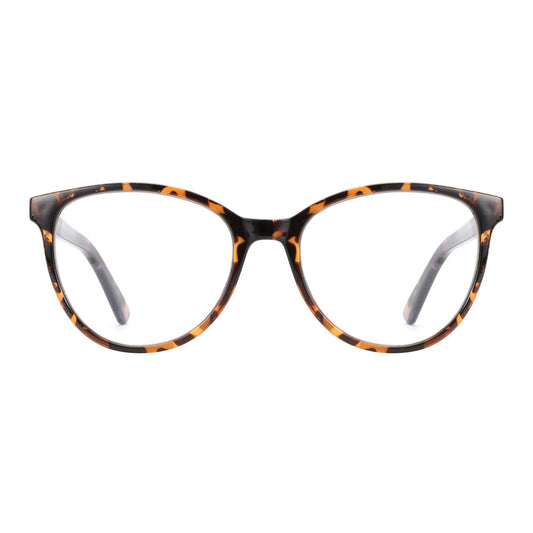

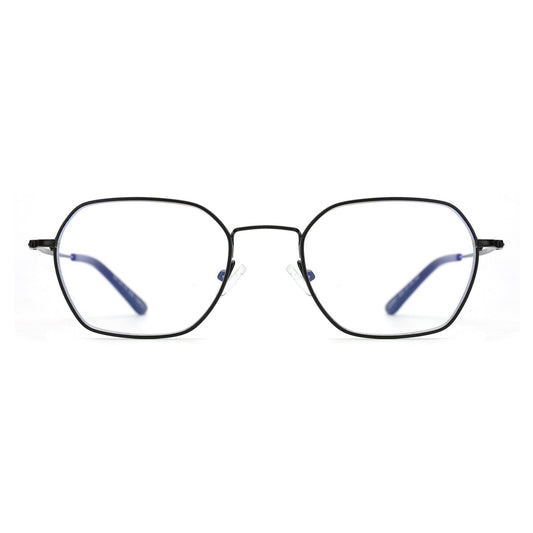

Center Thickness in High Plus Lenses: Frame Size Impact on Center Bulge for Hyperopia
A smaller frame opening can reduce the center bulge of a high-plus lens, but only if it still fits your eyes and prescription. The lens needed to fill a compact opening after it is centered for your pupillary distance (PD) is often smaller than the lens needed for a larger or more angular opening, and a smaller lens generally needs less material built up at the center. Minimum edge thickness, lens material, and your prescription power still shape the final result, so no single frame size guarantees the thinnest possible lens.
How Frame Opening Size Changes Center Bulge
A plus lens is generally thickest at its optical center and thinnest at the edge, the opposite of a minus lens used for nearsightedness. For a given prescription power and material, larger lens diameters increase surface sag and plus lens center thickness.
That relationship is often summarized in optical lab references as maximum thickness equal to diameter squared, times power, divided by a material-dependent constant, plus the required minimum edge thickness. The diameter, power and minimum-edge relationship shows why frame opening size and prescription power both matter together, and why minimum edge thickness is a fixed input rather than something that can be trimmed away. A frame's nominal size label, such as "52mm," is not the same as the finished lens diameter your prescription actually needs; we cover that gap in more detail on center versus edge thickness.
Comparing Smaller and Larger Lens Openings
The table below lines up the two general cases side by side. It assumes the same prescription power, lens material, and PD for both frames, since changing any of those changes the comparison.
| Factor | Smaller Lens Opening | Larger Lens Opening |
|---|---|---|
| Finished diameter needed after centering | Usually smaller | Usually larger |
| Surface sag contribution to center thickness | Lower, all else equal | Higher, all else equal |
| Minimum edge thickness requirement | Still applies | Still applies |
| Likely center-bulge outcome | Thinner center is more likely | Thicker center is more likely |

A smaller required diameter is an advantage only when the frame still fits your face and lets the lab center the lens correctly for your PD. A compact frame that forces poor centration or a tight fit does not deliver a reliable thickness benefit.
How to Compare Frame Shapes and Sizes Online
Comparing frames online works best as a short screening process rather than picking a shape label. Follow these steps in order.
- Check that the frame fits your face width and bridge measurements first; a frame that does not fit properly is not a valid candidate no matter how compact its lens opening looks.
- Compare the actual lens-opening dimensions listed for each candidate, or request the frame trace from the retailer if the listing does not show it. A nominal size number alone does not describe the opening's true shape.
- Account for your PD and how much the lens will need to be decentered to fill that specific frame aperture and PD decentration requirement, since two frames with similar listed widths can still need different finished diameters.
- Keep only the candidates that fit and appear to need the smaller finished diameter after decentration; this shortlist, not a shape category like round or square, is the meaningful comparison.

Our strong prescription frame guide walks through additional fit considerations if you're narrowing a shortlist, and you can browse current shapes in our compact frame options collection while you compare.
What to Request for a Frame-Specific Thickness Estimate
No online listing can give you an exact center thickness for your prescription, because that number depends on inputs specific to you and the frame, not the frame alone. Before relying on any predicted result, ask your retailer or optical lab for a center-thickness estimate built from your actual prescription power, the frame's aperture or trace, your PD and decentration, the lens material, and the required minimum edge thickness for that material.
Compare estimates only when they use the same material and minimum-edge assumptions across candidates; changing the material or edge assumption between two quotes makes the comparison meaningless. If a frame-specific estimate isn't available yet, treat the smaller-diameter frame as the more likely candidate for a thinner center rather than a confirmed one. Our lens thickness calculator guide explains how these inputs work together, and opticampus.opti.vision's approximate thickness calculator lets you test how changing power, material, or frame size shifts the estimate, though its own results still vary from a finished lens made for your exact frame.
FAQs
Does a rounder frame always produce a thinner center than a square one?
No. Shape alone doesn't determine the result. What matters is the actual lens opening size and the finished diameter needed after centering for your PD; a round frame with a large opening can need more material than a smaller square one.
Is there a standard minimum edge thickness for plus lenses?
Labs typically require enough edge thickness for safe mounting and to resist chipping, but the exact figure depends on the lab, material, and frame, so it's not a fixed number you can assume for every order.
Will switching to a thinner lens material fix a thick center on its own?
A higher-index material can reduce center thickness for the same prescription and frame, but diameter and minimum edge thickness still apply, so material change alone may not be enough if the frame opening stays large.
Can two frames with the same listed lens width still need different finished lens diameters?
Yes. The finished diameter also depends on your PD and how far the lens must be decentered to fill that frame's aperture, so identical listed widths can still result in different required diameters.
