


How to Prevent Eyelashes from Hitting Prescription Lenses
If your eyelashes keep brushing your prescription lenses, the underlying issue is usually frame fit. You need adequate clearance between your eyes and the back surface of the lenses. Choosing the right eyeglass styles can create that essential vertex distance through ergonomic bridge geometry, adjustable nose pads, optimal frame dimensions, and precise optical positioning.

Why Do Your Eyelashes Touch Your Glasses Lenses?
Eyelashes make contact with lenses primarily when a frame sits too close to the ocular plane. While long natural lashes, eyelash extensions, or volumizing mascaras amplify the issue, the mechanical positioning of your eyeglass frame is the key factor you can adjust.
Common anatomical and optical causes include:
- An improper bridge fit: If the bridge width or curvature fails to match your nasal profile, the frame rests too deep or slides down.
- A low nasal bridge or prominent cheekbones: Standard-fit frames tend to sit closer to the eyes and touch high cheeks on these facial structures.
- Excessive pantoscopic tilt: An aggressive downward lens angle tilts the upper half of the lens directly into your lash line.
- Improper nose-pad spacing: Pad height, depth, and splay angle dictate both vertical positioning and front-to-back lens clearance.
- Frame slippage: Frames lacking adequate temple tension or nose grip continuously slide backward against the lashes during facial movement.
The objective is ensuring sufficient clearance for unobstructed blinking while keeping the glasses stable and optically centered.
Choose Eyeglass Styles That Offer More Clearance
You do not need to restrict yourself to a single frame shape. Instead, prioritize frame architecture that sits securely on your nose and maintains adequate space in front of your eyes. As the American Academy of Ophthalmology notes, lens position relative to your lashes is determined by frame geometry and bridge fit, which can be fine-tuned by an eye care specialist.
When comparing frame styles and verifying how glasses should fit, assess four key structural components:
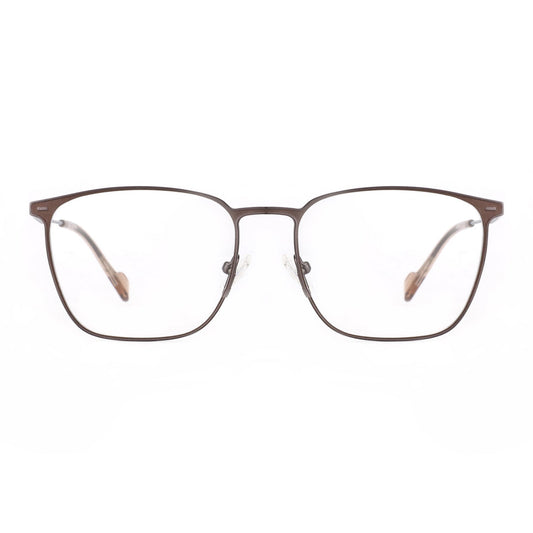
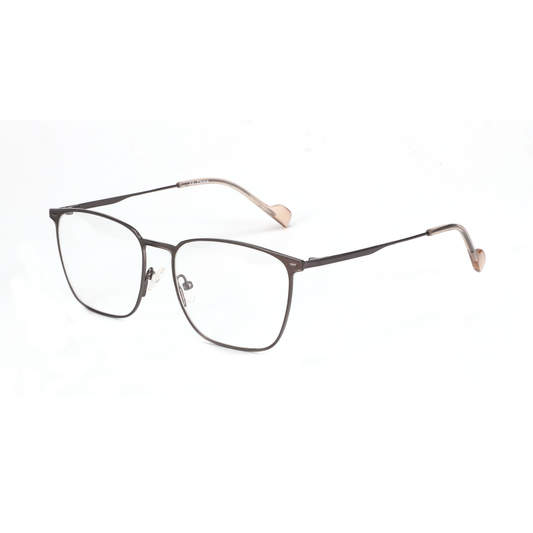
- Adjustable nose pads: Metal and combination frames with pad arms allow precise adjustments to raise the frame and move lenses forward.
- Matching bridge design: The bridge profile should distribute frame weight evenly without sinking into the nasal crest.
- Moderate lens height (B-measurement): Overly tall lenses may rest against high cheekbones when smiling, whereas balanced proportions preserve clearance.
- Stable frame width: Temples should rest flush against the head without pinching. For broader facial structures, wide-fit glasses prevent outward bowing and slippage.
You can evaluate detailed measurements and frame profiles in the Zenottic prescription eyeglasses collection, using bridge width and lens height as primary selection criteria.
Adjust Vertex Distance for Long Eyelashes Effectively
Vertex distance is the physical measurement between the posterior surface of an eyeglass lens and the anterior surface of the cornea. When lashes brush the lens, increasing this vertex distance by 1 to 2 millimeters resolves the friction.
This should never be done by simply pushing the frame halfway down your nose. Optimal alignment is achieved by adjusting the pad arms, temple bend, and pantoscopic angle. On frames with adjustable nose pads, an optician can adjust the pad arms outward to advance the frame front safely.
Vertex distance directly influences effective refractive power, especially for higher prescriptions. Research from the National Academy of Opticianry details how lens position changes effective power, noting that power compensation is required at powers exceeding ±4.00 D. Consequently, adjusting vertex distance for long eyelashes should be handled through careful, calibrated adjustments rather than forceful manual bending.
Use Nose Pad Adjustments for a Better Low Bridge Fit
Adjustable nose pads provide critical versatility for low nasal bridges, allowing wearers to calibrate frame elevation and standoff distance independently.
Specialized low-bridge ergonomic frames incorporate elongated pad arms and tailored splay angles to keep the eyewire off the cheeks and maintain lash space.
When performing nose pad adjustments for low bridge fit, adjustments typically target:
- Pad spacing: Narrowing the pad distance to raise the frame higher on the nasal bone
- Splay angle: Aligning the pad face flat against the nasal slope for balanced pressure
- Standoff distance: Extending pad arms forward to increase lash-to-lens clearance
- Pantoscopic tilt: Reducing forward lens angle to eliminate brow and lash collision
The goal is a balanced fit that preserves visual acuity and all-day comfort. If frames continue slipping after adjustment, explore the ergonomic eyewear guide for slipping and pinching to find a frame with structural proportions matched to your face.

Compare Acetate Spectacle Frames With Metal Options for Lens Distance
Both acetate spectacle frames and metal frames can accommodate longer eyelashes, but they differ in fitting flexibility.
| Frame Construction | Primary Fit Advantage | Key Fitting Considerations |
|---|---|---|
| Metal with Adjustable Nose Pads | Maximum control over vertex distance, height, and tilt | Pad material comfort, bridge symmetry, arm durability |
| Acetate with Fixed Saddle Bridge | Broad, seamless surface contact when correctly sized | Accurate bridge measurement, cheek clearance, fixed distance |
| Combination Frame (Acetate + Metal Pads) | Bold acetate aesthetics combined with adjustable pad clearance | Bridge screw tightness, pad arm angle, lens weight |
Metal frames offer the fastest pathway to increasing lash clearance because their nose pad arms can be mechanically lengthened. Conversely, fixed-bridge acetate frames rely entirely on precise initial sizing.
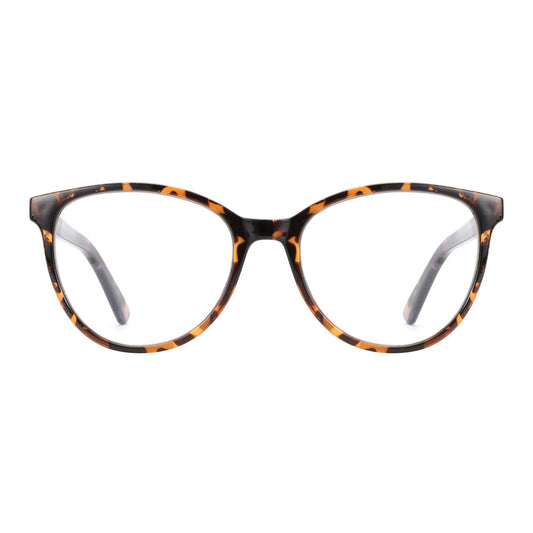
For instance, the Ephesus acetate frame utilizes an integrated 18 mm keyhole-inspired saddle bridge. If you prefer acetate, comparing its bridge width and lens tilt against your current well-fitting eyewear ensures your lashes will not make contact.
Check Comfort and Lash Clearance Before You Buy
When trying on new eyeglasses, perform a comprehensive dynamic fit test:
- Blink Test: Look straight ahead and blink rapidly. Ensure your eyelashes do not brush the back lens surface.
- Facial Expression Test: Smile and speak. Confirm that the lower rim does not rest on your cheeks or push the frame upward.
- Downward Gaze Test: Tilt your head forward to check whether gravity causes the frame to slide down your nose.
- Temple Pressure Check: Verify that the temples hold the head securely without pinching behind the ears.
If you wear mascara, curled lashes, or lash extensions, conduct this test while wearing your routine eye cosmetics to account for added lash length.
Give Your Lashes More Room With the Right Fit
You never have to sacrifice frame aesthetics for functional clearance. By selecting the correct bridge width, optimizing vertex distance with adjustable nose pads, and verifying frame dimensions, you can achieve clean lens optics and all-day comfort.
Explore the full Zenottic eyeglasses collection to find styles engineered with ergonomic bridges and adjustable fitting options tailored to your facial anatomy.
Eyeglasses Fit and Long Eyelashes FAQs
Q1: Can Mascara Make My Eyelashes Hit My Glasses More Often?
Yes. Lengthening mascaras, eyelash curlers, and extensions add physical length and upward curl, reducing available vertex clearance. Always evaluate frame fit with your standard makeup applied.
Q2: Should I Push My Glasses Down My Nose to Stop Lash Contact?
No. Sliding frames down your nose shifts the optical center away from your pupils, inducing unwanted prism and visual distortion. Adjusting nose pads or selecting a narrower bridge is the proper optical solution.
Q3: Can an Optician Adjust Acetate Frames for Long Eyelashes?
Yes. Opticians can modify pantoscopic tilt and adjust temple curl using localized frame warmers. However, fixed acetate bridge spacing cannot be widened or narrowed mechanically, making initial bridge sizing essential.
Q4: Do Eyelash Extensions Mean I Need Different Glasses?
Not necessarily. If your existing frame features adjustable nose pads, an optician can adjust the pad arms to create 1–2 mm of extra standoff clearance without replacing the frame.
