




Content Creator Glasses: Eliminating Ring Light Glare on Camera
Summary
Eliminating ring light glare in glasses on camera requires a dual approach: advanced lens technology and precise lighting geometry. In 2026, the standard for content creator eyewear has shifted from basic anti-reflective (AR) coatings to multi-layer interference stacks that specifically target the visible spectrum emitted by high-CRI LED ring lights. By utilizing high-index materials with specialized coatings that comply with ISO 8980-4 standards, creators can achieve up to 99.5% light transmission, effectively making the lenses "invisible" to the camera sensor. This guide explores the physics of Fresnel reflections, the impact of lens base curves on reflection patterns, and the "3D positioning" lighting technique that surpasses the traditional 45-degree rule. Whether you are a professional streamer or a hobbyist videographer, understanding these technical nuances ensures your eyes remain the focal point of your content, free from distracting white halos.
Key takeaways
- Prioritize Multi-Layer AR Coatings: Standard coatings are often insufficient for studio lighting; look for premium stacks that utilize destructive interference to cancel out specific LED wavelengths.
- Manage Fresnel Reflections: High-index lenses (1.67 and 1.74) naturally reflect more light (up to 10% per surface) and require more sophisticated AR treatments than standard plastic.
- Optimize Base Curve: The curvature of your lens (base curve) dictates where reflections land; flatter lenses are often easier to manage under fixed camera angles.
- Beyond the 45-Degree Rule: Effective glare reduction involves 3D positioning—adjusting height, tilt, and distance—to move the "angle of reflection" away from the camera lens.
- Durability Matters: Frequent cleaning in studio environments can degrade coatings; ensure your lenses meet ISO 8980-4 standards for abrasion resistance.
Nothing ruins a video like bright white circles reflecting in your glasses. As content creation becomes increasingly professionalized in 2026, the "aesthetic" and "functional" problem of ring light glare has become a primary hurdle for creators who wear prescription eyewear. We test the best anti-reflective (AR) coatings designed to kill ring light glare, ensuring your eyes—not your lights—are the focus of your content.
The Physics of On-Camera Glare: Why Ring Lights Are a Challenge
To solve the problem of glare, we must first understand the physics of how light interacts with lens surfaces. When light from a ring light hits a lens, a portion of it is reflected back toward the camera. This is governed by the Fresnel equations, which describe the behavior of light moving between media with different refractive indices (air and the lens material).
For creators using high-index materials to achieve a thinner profile, the challenge is amplified. A standard 1.50 index plastic lens reflects approximately 4% of incident light per surface. However, a 1.74 super high-index lens can reflect nearly 8-10% without treatment. This 2x increase in reflection makes high-index lenses significantly more prone to "white-out" glare on camera unless paired with a high-performance AR coating.
Logic Summary: The Fresnel reflection coefficient increases as the refractive index of the lens material rises. This means that the thinner and lighter your lenses are, the more critical the quality of your anti-reflective coating becomes for video production.
When selecting lenses, it is helpful to consult a technical guide to high-index lens materials and standards to understand how different polymers, such as the MR™ series, interact with light. These materials are designed to balance optical clarity with thinness, but their higher refractive index necessitates a more robust coating strategy.

How Anti-Reflective (AR) Coatings Work for Creators
Modern AR coatings are not just a single layer; they are complex "stacks" of microscopic layers of metal oxides (like titanium dioxide or zirconium dioxide). These layers are applied via vacuum deposition and are engineered to a precise thickness—usually a fraction of a wavelength of light.
The goal is to create "destructive interference." When a light wave hits the coating, it reflects off both the top and bottom surfaces of the thin film. If the film is exactly one-quarter the thickness of the light's wavelength, the two reflections will be out of phase and cancel each other out. For content creators, this means the bright white circle of the ring light is effectively "erased" before it can reach the camera.
The Importance of ISO 8980-4 Standards
In a studio environment, glasses are subject to more frequent cleaning due to makeup, sweat, and the accumulation of dust from equipment. This is where durability standards like ISO 8980-4 become vital. This standard measures the abrasion resistance of coatings. A coating that fails this standard will develop micro-scratches over time, which scatter light and create a "hazy" glare that is even harder to fix in post-production than a clean ring reflection.
When comparing high-index lens options, always verify that the AR coating includes a hydrophobic and oleophobic top layer. These layers reduce the surface energy of the lens, making it harder for oils and water to stick, which in turn reduces the frequency and intensity of cleaning required.
The Hidden Variable: Lens Curvature and Base Curve
One of the most overlooked factors in on-camera glare is the "base curve" of the lens. The base curve is the front surface power of the lens. Steeper curves (higher base curve numbers) are common in wrap-around or high-prescription lenses, while flatter curves are found in lower prescriptions or specialized "aspheric" designs.
Steeper curves create a wider "capture area" for reflections. A ring light placed to the side might still reflect off the edge of a highly curved lens into the camera. Conversely, a flatter lens has a more predictable reflection path, making it easier to "hide" the glare by slightly adjusting the light's position.
| Feature | Impact on Glare | Recommended for Creators |
|---|---|---|
| Refractive Index | Higher index = more natural reflection. | 1.61 or 1.67 with premium AR. |
| Base Curve | Steeper curves capture more light angles. | Flatter (Aspheric) designs. |
| Coating Layers | More layers = better interference. | Multi-layer stacks (7+ layers). |
| Surface Treatment | Oleophobic layers prevent oil-smear glare. | Mandatory for studio use. |
Logic Summary: Aspheric lenses are recommended for creators because they use flatter base curves to achieve the same optical correction as traditional spherical lenses. This reduces the "fish-eye" reflection effect often seen in video.
Advanced Lighting Techniques: The 3D Positioning Strategy
While many tutorials suggest the "45-degree rule" (placing lights at a 45-degree angle from the subject), this is often insufficient for ring lights, which are designed to be used "on-axis" (around the camera). To eliminate glare while keeping the ring light's signature look, creators should adopt a 3D positioning strategy.
- Height Adjustment: Raise the ring light significantly above eye level. This forces the reflection to bounce downward, away from the camera lens.
- The "Tilt and Pivot": Slightly tilt the temples of your glasses upward. This changes the angle of the lens relative to the light source without noticeably changing your appearance on camera.
- Diffusion: Adding a secondary diffuser or a "softbox" cover to your ring light can break up the hard edges of the reflection, making any remaining glare look like a natural highlight rather than a distracting circle.

For those who spend hours under these lights, blue light protection for extended screen time is also a consideration. Many modern AR coatings now integrate blue-light filtering properties directly into the interference stack, providing a dual benefit of glare reduction and digital wellness.
Maintaining Eye Health and Comfort in the Studio
Content creation is demanding on the eyes. The combination of high-intensity studio lights and long hours of editing can lead to Digital Eye Strain (DES). Beyond just eliminating glare for the audience, creators must consider their own visual comfort.
Ensuring a proper eyewear fit for all-day comfort is the first step. If your frames are too tight or sit too close to your face, they can trap heat and moisture, leading to fogging—another form of "glare" that ruins shots. Furthermore, maintaining eye health with blue light filtering can help regulate your circadian rhythm, which is often disrupted by late-night streaming or editing sessions.
Logic Summary: Eye comfort is a performance factor for creators. If you are squinting due to glare or strain, your on-camera presence suffers. A holistic approach includes both external lighting control and internal lens technology.
Choosing the Right Frames for Video
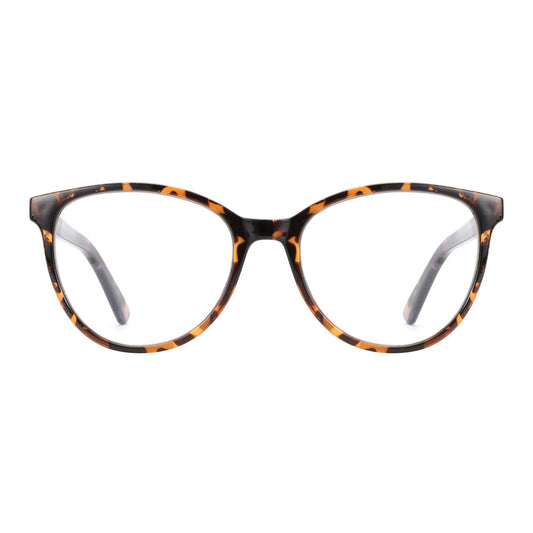
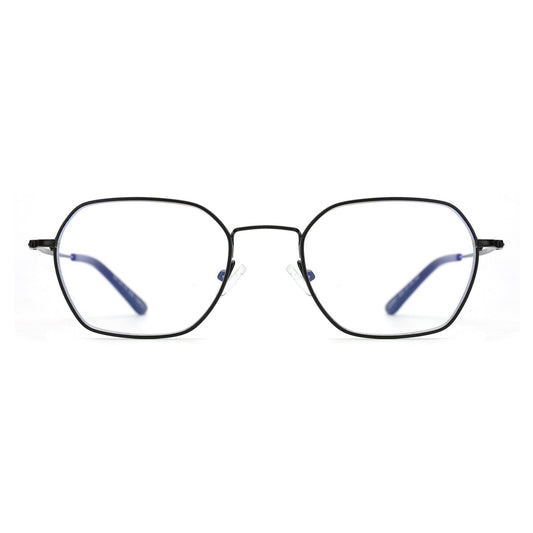
The frames themselves can contribute to glare. Glossy acetate or polished metal frames can reflect light just as much as the lenses. For a professional look, consider matte finishes or thin wire frames that minimize the surface area available for reflection.
You can browse our blue light blocking glasses for styles that balance aesthetic appeal with the technical requirements of a studio environment. Many of these frames are designed with the "creator-first" philosophy, prioritizing lightweight materials that won't cause fatigue during 8-hour marathons.
FAQ
How can I tell if my glasses have a good anti-reflective coating? You can verify the presence of an AR coating by holding your glasses under a light source and looking at the color of the reflection. A lens without a coating will show a bright white reflection, while a coated lens will show a faint green, blue, or purple tint. This tint is the result of the specific wavelengths the coating is designed to "cancel out." In 2026, premium coatings often have a very subtle, almost invisible residual tint to ensure maximum color neutrality on camera.
Do blue light glasses help with ring light glare? Blue light glasses and anti-reflective glasses are often confused, but they serve different purposes. Blue light filtering is designed to block specific high-energy visible (HEV) light from screens, whereas AR coatings are designed to reduce reflections from all light sources. However, most high-quality "creator glasses" combine both technologies into a single lens. If your blue light glasses do not have a dedicated AR stack, they may actually increase glare on camera due to the way they reflect certain blue wavelengths.
Why does my ring light still show up in my glasses even with AR coating? No AR coating is 100% effective at all angles. If the ring light is positioned directly in front of you and the camera is also directly in front, the angle of incidence is zero, which is the most difficult scenario for any coating to manage. The key is to use the "3D positioning" strategy mentioned above—move the light slightly higher or to the side to change the angle of reflection so it misses the camera lens.
Can I add an anti-reflective coating to my existing glasses? Generally, AR coatings must be applied during the initial lens manufacturing process in a vacuum chamber. It is not a "spray-on" treatment that can be added later. If you are experiencing significant glare issues, it is usually more effective to order a new pair of lenses specifically engineered with a multi-layer AR stack and a flatter base curve.
Does the color of the AR coating reflection matter for video? Yes, the residual color of the reflection (the "bloom") can affect the color balance of your video. A green or blue bloom is common and generally easy to ignore. However, some older or cheaper coatings have a strong purple or yellow bloom that can be distracting or clash with your studio's color grading. Modern "creator-grade" coatings aim for a neutral or very faint green bloom that is virtually unnoticeable to most camera sensors.
How should I clean my glasses to protect the anti-glare coating? To maintain the integrity of your AR coating and comply with durability expectations like ISO 8980-4, you should always rinse your lenses with lukewarm water first to remove abrasive dust. Use a pH-neutral dish soap or a dedicated lens cleaner, and dry them with a clean microfiber cloth. Never use paper towels, tissues, or the hem of your shirt, as these materials contain wood fibers that can create micro-scratches over time, eventually destroying the coating's effectiveness.
References
Government / Standards / Regulators
- ISO 8980-4:2006 - Ophthalmic optics — Uncut finished spectacle lenses — Part 4: Specifications and test methods for anti-reflective coatings
- ANSI Z80.1-2025 - American National Standard for Ophthalmics - Prescription Spectacle Lenses
Industry Associations / Research Institutes
- The Vision Council - Anti-Reflective Lens Technology Report
- Optical Heritage Museum - Evolution of Thin Film Coatings
Academic / Whitepapers / Labs
- Fresnel Equations and Reflectance of Ophthalmic Materials (Search intent for refractive index studies)
- Thin-Film Interference and Destructive Interference in Optical Systems
