



Architectural Eyewear: The New Standard for Professional Style
Summary

Architectural eyewear represents the pinnacle of professional style in 2026, merging structural engineering principles with the refined aesthetics of "Quiet Luxury" and the "Office Siren" movement. These frames prioritize geometric precision, material integrity—specifically high-grade titanium and Japanese acetate—and a minimalist philosophy that enhances rather than obscures facial features. By focusing on intentional design and structural balance, architectural eyewear offers a sophisticated alternative to traditional professional frames, providing a structured, intellectual look that resonates with designers, architects, and corporate leaders alike.
Key takeaways
- Structural Engineering Over Mere Shape: True architectural eyewear applies load-bearing and material efficiency principles to frame design, ensuring durability and comfort through balanced weight distribution.
- Material Excellence: Beta-titanium and specialized acetates are the preferred materials for 2026, offering the necessary tensile strength for thin, geometric profiles without sacrificing flexibility.
- Precision Fitment: Geometric frames require more meticulous adjustment than standard shapes to ensure that the sharp angles align correctly with the wearer's pupillary distance and facial symmetry.
- Aesthetic Evolution: The trend has shifted from "overbuilt" chunky frames to "reductive" designs that use negative space and clean lines to create a confident, professional presence.
The Rise of Architectural Eyewear in Professional Environments
As we move through 2026, the professional landscape has undergone a significant aesthetic shift. The "Office Siren" trend, once a niche social media aesthetic, has matured into a sophisticated standard for workplace attire. This evolution has brought architectural glasses frames to the forefront of professional fashion. Unlike the oversized, logo-heavy trends of previous years, architectural eyewear is defined by its restraint and structural clarity. It is the visual manifestation of "Quiet Luxury"—a commitment to quality and design that speaks through precision rather than volume.
For professionals in design-centric fields, such as architecture and engineering, eyewear is often the most significant accessory. It serves as a subtle indicator of one's design philosophy. A frame that incorporates clean lines and geometric shapes suggests a mind that values order, precision, and structural integrity. This "Wardrobe Effect"—the practice of building a curated collection of eyewear for different professional settings—has become a hallmark of the modern professional's approach to self-presentation.
Logic Summary: The rise of architectural eyewear is attributed to the convergence of mature aesthetic trends (Office Siren, Quiet Luxury) and a growing consumer preference for "investment pieces" that signal professional expertise and design literacy.
Defining the Architectural Aesthetic: Beyond Simple Geometry
While many perceive architectural eyewear as simply "square" or "hexagonal" glasses, the true definition is rooted in the principles of structural design. In 2026, the focus has moved toward how a frame interacts with the three-dimensional space of the face. This involves the use of negative space—the gaps within the frame structure—and the intentional manipulation of line weights to create visual balance.
Minimalist eyewear in this category often features "reductive" design, where every element of the frame serves a functional purpose. There are no superfluous decorations; the beauty lies in the hinge mechanism, the bridge's curvature, and the temple's taper. This approach aligns with the Bauhaus principle of "form follows function," making these frames particularly appealing to those who appreciate mid-century modern or contemporary minimalist architecture.
When selecting minimalist geometric glasses frames online, it is essential to consider how the "structural" lines of the frame interact with your natural features. For instance, a frame with a strong horizontal brow line can provide a sense of stability and authority, while vertical geometric elements can elongate the face and add a sense of intellectual rigor.
Material Integrity: The Engineering of Titanium and Acetate
The success of an architectural frame depends heavily on the materials used to construct it. In 2026, material science has advanced to allow for thinner, stronger, and more resilient frames than ever before.
The Superiority of Beta-Titanium
Titanium remains the gold standard for structural metal frames. Specifically, Beta-titanium alloys are favored for their unique combination of high tensile strength and elasticity. This allows designers to create incredibly thin, minimalist profiles that can withstand the rigors of daily professional use without losing their shape. The material's biocompatibility and corrosion resistance further enhance its value as a long-term investment.
Japanese Acetate and Structural Rigidity
For those who prefer the tactile warmth of plastic, high-grade Japanese acetate provides the necessary rigidity for architectural designs. Unlike standard petroleum-based plastics, Japanese acetate is a plant-based material that undergoes a lengthy curing process. This results in a denser, more stable material that can hold sharp, geometric edges and maintain its luster over years of wear.

When pairing these high-quality frames with lenses, professionals often require advanced optical solutions. For those with higher prescriptions, selecting the right lens material is as critical as the frame itself. Our Technical Guide to High-Index Lens Materials and Standards provides an in-depth look at how MR™ series polymers (1.61, 1.67, 1.74) offer the optical clarity and reduced thickness necessary to complement minimalist architectural frames, ensuring that the lenses do not detract from the frame's structural profile.
Logic Summary: Material choice is not merely aesthetic; it is a functional requirement. Titanium and high-grade acetate are selected for their ability to maintain precise geometric tolerances and structural integrity under stress.
The Structural Advantage for Small Faces and Diverse Features
One of the most significant challenges in eyewear has been finding architectural style eyewear for small faces. Traditional "bold" geometric frames often overwhelm smaller features, creating a "costume" effect rather than a professional one. However, the 2026 architectural trend emphasizes "scaled precision."
For individuals with smaller facial structures, the key is to look for frames that utilize thin-gauge metal or slim-profile acetate. Geometric shapes like the "crown panto" or octagonal frames provide the desired structural look without the excessive bulk. These frames use sharp angles to create definition, which is particularly effective for those with softer facial contours.
Furthermore, the "Office Siren" aesthetic often utilizes structured metal frames to create a sharp, focused look. These frames act as a "contour" for the eyes, providing a frame of reference that enhances the wearer's natural symmetry. When choosing a frame, it is vital to understand how to choose the best eyeglasses frames for your face shape to ensure the architectural elements align with your bone structure.
Choosing Your Professional Frame: A Decision Framework
To help you navigate the selection process, we have developed a framework based on the primary professional intent.
| Professional Intent | Recommended Frame Style | Key Material | Design Focus |
|---|---|---|---|
| Creative Leadership | Bold Geometric (Hexagonal/Octagonal) | Japanese Acetate | Visual impact & material depth |
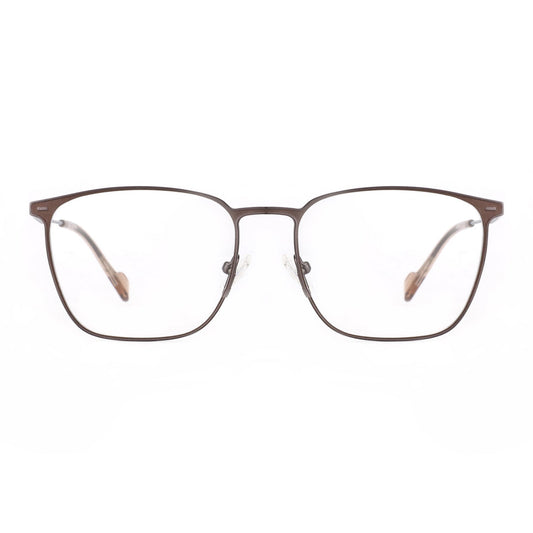
| Technical Precision | Ultra-Thin Minimalist | Beta-Titanium | Weightlessness & engineering |
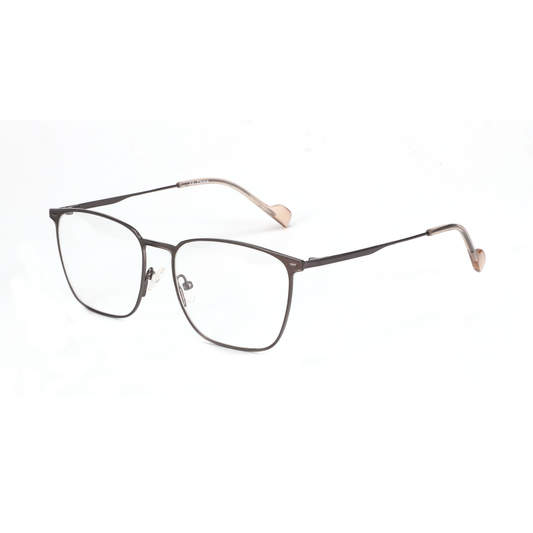
| Corporate Authority | Structured Rectangular/Square | Polished Stainless Steel | Stability & classic lines |
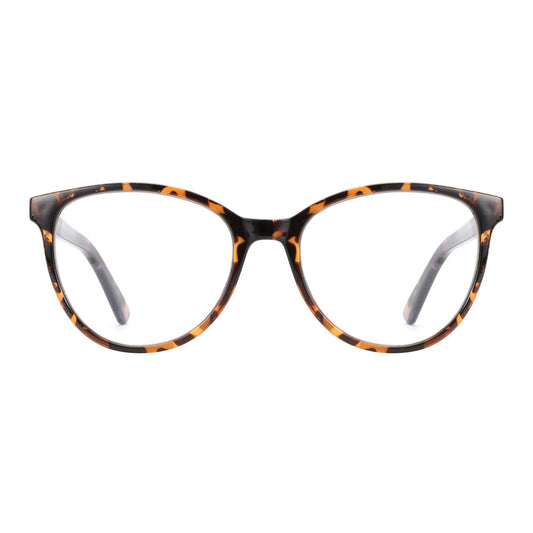
| Intellectual Softness | Geometric Round (Crown Panto) | Mixed Media (Metal/Acetate) | Balance of tradition & modernism |
Logic Summary: This framework assumes that eyewear is a tool for professional communication. The recommendations are based on the psychological associations of different shapes and materials within a corporate or creative context.
Common Misconceptions About Geometric Frames
As architectural eyewear becomes more prevalent, several misconceptions have emerged that can lead to poor purchasing decisions.
- "Geometric frames are inherently uncomfortable": This is a fallacy. While sharp angles might look "hard," the comfort of a frame is determined by its weight distribution and fitment, not its external shape. A well-engineered geometric frame can be more comfortable than a poorly balanced round one.
- "Minimalist means simple": In the context of architectural design, minimalism is the result of complex engineering. Reducing a frame to its essential elements requires higher-quality materials and more precise manufacturing than creating a bulky, decorative frame.
- "Bold shapes are only for bold personalities": Architectural eyewear is about structure, not just "loudness." Even a subtle geometric frame can provide a sense of professional composure and intellectual focus for those with more reserved personalities.
When purchasing all-black designer glasses or other architectural styles, it is crucial to use a reputable online glasses shopping guide to ensure you are measuring your pupillary distance and frame dimensions accurately. Architectural frames leave little room for error in fitment.
FAQ
What exactly is "architectural eyewear" in the context of 2026 fashion? Architectural eyewear refers to frames designed with the same principles used in modern architecture: structural integrity, geometric precision, and a "form follows function" philosophy. These frames often feature clean lines, negative space, and high-performance materials like titanium, moving away from decorative trends toward a more intellectual and professional aesthetic.
Are geometric frames suitable for a conservative corporate environment? Yes, provided the scale and material are appropriate. Thin-gauge metal frames in rectangular or subtle hexagonal shapes offer a modern update to traditional corporate eyewear without being distracting. The key is to choose "reductive" designs that emphasize structure over ornamentation, aligning with the "Quiet Luxury" standard.
How do I ensure architectural frames don't overwhelm my small face? Look for "slim-profile" geometric designs and pay close attention to the lens width and bridge size. Frames with thin titanium wires or narrow acetate rims provide the architectural look while maintaining a scale that is proportional to smaller features. Avoid oversized "statement" pieces in favor of precisely scaled geometric shapes.
Why is titanium preferred for architectural-style frames? Titanium, particularly Beta-titanium, offers the high tensile strength required to create the very thin, sharp angles characteristic of architectural design. It is also incredibly lightweight, hypoallergenic, and flexible, ensuring that the frame maintains its geometric precision over time while remaining comfortable for all-day professional wear.
Do geometric frames require special maintenance? While the materials themselves are durable, the precise angles of geometric frames can make misalignments more noticeable. It is important to store them in a hard case and avoid placing them face-down. Because architectural frames often feature intricate hinge designs, periodic tightening of screws by a professional or with a precision kit is recommended.
Can I get architectural frames with blue light blocking lenses? Absolutely. Most architectural frames can be fitted with a variety of lens types, including blue light blocking, photochromic, or high-index lenses. Given that these frames are often worn in high-screen-use professional environments, adding blue light protection is a common and practical choice for modern professionals.
References
Government / Standards / Regulators
- ANSI Z80.1-2025: Ophthalmics - Prescription Ophthalmic Lenses - Recommendations.
- ISO 8980-1:2023: Ophthalmic optics — Uncut finished spectacle lenses — Part 1: Specifications for single-vision and multifocal lenses.
Platform official docs & policies
- Zenottic Technical Guide: Technical Guide to High-Index Lens Materials and Standards.
Industry associations / research institutes / market reports
- The Vision Council: 2026 Consumer Trends in Professional Eyewear Report.
- International Design Excellence Awards (IDEA): Trends in Structural Eyewear Design.
Academic / whitepapers / labs
- Material Science Journal: "The Evolution of Beta-Titanium Alloys in Ophthalmic Applications" (2025).
- Optical Engineering Lab: "Impact of Frame Geometry on Weight Distribution and Wearer Comfort."
Community
- r/Architecture: "The Best Eyewear for the Modern Architect" (Intent only; not authoritative).
- StyleForum: "The Evolution of the Office Siren Aesthetic in 2026" (Intent only; not authoritative).
