




High Astigmatism Explained: Best Lenses for High CYL Prescriptions
Summary

Correcting high astigmatism (cylinder values greater than 2.00) requires a strategic combination of high-index lens materials and specific frame geometries to minimize peripheral distortion and edge thickness. By selecting materials like 1.67 or 1.74 high-index resins and opting for smaller, rounded frames, wearers can achieve superior optical clarity and a more aesthetic profile while adhering to the latest 2026 manufacturing standards.
Key takeaways
- Prioritize High-Index Materials: For CYL values above 2.00, 1.67 or 1.74 high-index lenses significantly reduce the "coke-bottle" effect and physical weight.
- Frame Geometry Matters: Small, round, or oval frames are ideal for high astigmatism as they minimize the thickest parts of the lens and reduce peripheral "swim."
- Understand Technical Standards: Ensure your lenses comply with ANSI Z80.1-2025 or ISO 8980-1 to guarantee precise cylinder axis alignment and power accuracy.
- Manage Vertex Distance: A proper bridge fit that keeps the lenses close to the eyes (optimal vertex distance) is critical for maintaining the effective power of high CYL prescriptions.
- Digital Surfacing Benefits: High-definition or free-form digital surfacing can help customize the lens to your specific frame, further reducing peripheral distortion.
Understanding High Astigmatism and the Cylinder (CYL) Value
Astigmatism occurs when the cornea or lens has an irregular curvature, causing light to focus on multiple points rather than a single point on the retina. In a prescription, this is represented by the Cylinder (CYL) value. While a standard prescription might have a CYL of -0.50 or -1.00, "high astigmatism" is generally classified as any value exceeding -2.00 or -3.00. Navigating this level of correction requires more than just a standard lens; it demands an understanding of how light interacts with the steeper curves of the lens material.
When you read your eye prescription, the CYL value indicates the amount of lens power needed to correct the astigmatism, while the Axis value (0 to 180 degrees) determines the orientation of that power. For high CYL prescriptions, even a minor misalignment of the axis can lead to significant blurriness and eye strain. This is why precision in manufacturing, guided by updated standards like ANSI Z80.1-2025, is non-negotiable for high-astigmatism patients in 2026.
Choosing the Best Lens Materials for High CYL
The primary challenge with high astigmatism lenses is the varying thickness across different meridians of the lens. This often results in a lens that is significantly thicker at certain edges, leading to the "fish-eye" effect or peripheral distortion. To combat this, high-index materials are the gold standard. These materials have a higher refractive index, meaning they can bend light more efficiently with less physical mass.
For those with high CYL, the choice often comes down to 1.67 vs. 1.74 materials. A 1.67 high-index lens offers a great balance of thinness and optical clarity (Abbe value). However, for prescriptions where the combined sphere and cylinder power is particularly high, 1.74 super high-index lenses provide the maximum reduction in thickness and weight. It is important to note that while 1.74 is thinner, it has a lower Abbe value, which can occasionally lead to slight chromatic aberration (color fringing) in the periphery for sensitive wearers.
Logic Summary: High-index materials (1.67/1.74) are recommended for CYL > 2.00 because they reduce the steepness of the lens curve required for correction. This minimizes the weight and the "magnification" effect on the wearer's eyes. However, wearers sensitive to peripheral color fringing may prefer 1.67 over 1.74 due to its slightly better optical properties.

The Impact of Frame Selection on Visual Quality
The frame you choose is just as important as the lenses when dealing with high astigmatism. Because high CYL lenses have significant thickness variations, the shape and size of the frame directly impact how much of that thickness is visible and how much distortion you experience.
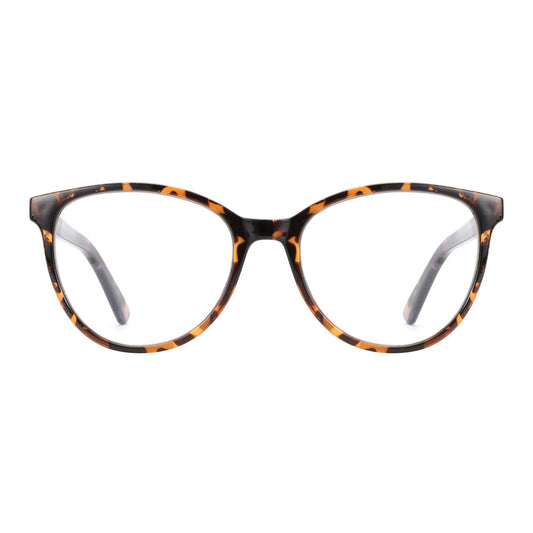
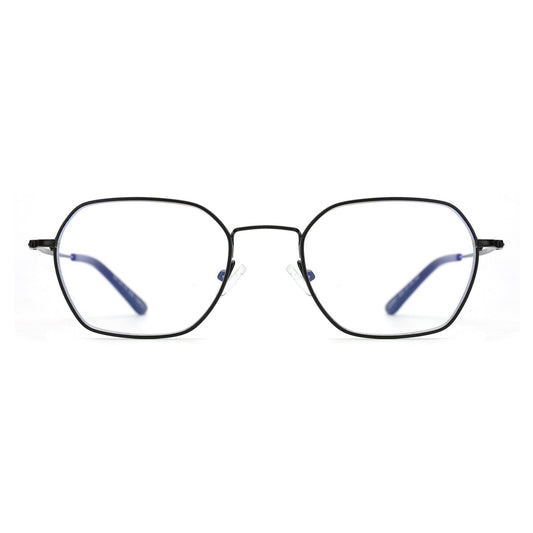
Smaller frame sizes are generally preferred because they require a smaller "blank" of lens material, which naturally cuts away the thickest peripheral parts of the lens. Furthermore, rounded or oval shapes are superior to rectangular or square frames. Rectangular frames have sharp corners where the lens thickness is most pronounced, which can exacerbate the "barrel distortion" effect. By choosing a frame that fits your face shape while remaining compact, you ensure the optical center of the lens aligns perfectly with your pupil, reducing the "swimming" sensation often reported by high-astigmatism users.
Optimal Frame Features for High CYL Prescriptions
| Feature | Recommendation | Why it Matters |
|---|---|---|
| Eye Size | 48mm - 52mm (Small to Medium) | Reduces edge thickness and lens weight. |
| Lens Shape | Round, Oval, or Softened Square | Minimizes peripheral distortion at the corners. |
| Bridge Fit | Fixed or Adjustable Nose Pads | Maintains consistent vertex distance for power accuracy. |
| Frame Material | Acetate or Thick Metal | Better hides the edge thickness of high-index lenses. |
| Wrap Angle | Flat (Low Wrap) | Prevents axis distortion caused by curved frame fronts. |
Technical Standards and Manufacturing Precision
In 2026, the eyewear industry follows rigorous standards to ensure that high-prescription lenses perform as intended. The Technical Guide to High-Index Lens Materials and Standards highlights the importance of the MR™ series polymers (like MR-7 and MR-10) used in high-index lenses. These materials are engineered to meet ANSI Z80.1-2025 requirements, which dictate strict tolerances for cylinder power and axis orientation.
For a high CYL prescription, a deviation of even 2 degrees in the axis can result in a noticeable loss of visual acuity. Digital surfacing, also known as free-form technology, allows the lens to be surfaced with point-by-point precision on the back side. This technology accounts for how the frame sits on your face, including the vertex distance (the distance from the back of the lens to your cornea). If the vertex distance is too large, the effective power of your astigmatism correction changes, leading to suboptimal vision.
Managing Peripheral Distortion and Adaptation
New wearers of high astigmatism glasses often experience a "swimming" sensation or a feeling that the ground is tilting. This is a result of the brain adapting to the new way light is being bent through the periphery of the lens. While high-index materials and proper frame selection minimize this, an adaptation period of 1 to 2 weeks is common.
To ease this transition, ensure your glasses are adjusted correctly by a professional. The "pantoscopic tilt" (the angle at which the frame sits on your face) and the "face form wrap" must be optimized. For high CYL, a flatter frame front is usually better, as excessive wrap can introduce unwanted cylinder power. If you are browsing a wide collection of eyeglasses, look for styles that maintain a relatively flat profile across the front.
Logic Summary: Peripheral distortion is an inherent byproduct of bending light at steep angles. While digital surfacing and high-index materials reduce this effect by up to 30-40%, it cannot be eliminated entirely in high CYL cases. Adaptation is a neurological process where the brain learns to "ignore" these peripheral artifacts.
FAQ
What is considered a high cylinder (CYL) prescription? In the optical industry, a cylinder value of -2.25 or higher is typically classified as high astigmatism. Prescriptions reaching -4.00 or -5.00 are considered "ultra-high" and require specialized high-index materials and precise manufacturing to ensure the lenses are wearable and optically accurate.
Why do my high astigmatism glasses make the ground look curved? This phenomenon, often called "barrel distortion" or "spatial distortion," occurs because the lens power varies across the surface to correct the irregular shape of your eye. High-index lenses and digital surfacing help minimize this, but your brain also needs time to adapt to the new visual input, which usually takes about a week of consistent wear.
Can I wear rimless frames with high astigmatism? While possible, rimless frames are generally not recommended for high CYL prescriptions. Because the edges of the lenses can be quite thick, they will be fully exposed in a rimless design, which may be aesthetically unappealing. Additionally, high-index materials used for high astigmatism can be more brittle, making them prone to cracking at the drill points in rimless styles.
Does vertex distance affect my astigmatism correction? Yes, vertex distance—the space between your eye and the lens—significantly impacts the effective power of a high-prescription lens. If the glasses sit too far down your nose, the cylinder power may feel weaker or distorted. Ensuring a snug, professional fit is crucial for high astigmatism to maintain the intended correction.
Are 1.74 lenses always better than 1.67 for astigmatism? Not necessarily. While 1.74 lenses are thinner and lighter, they have a lower Abbe value (around 32) compared to 1.67 (around 33-35). This means 1.74 lenses may produce more "chromatic aberration" or color fringing in the periphery. If your priority is the thinnest lens possible, 1.74 is the winner; if you are sensitive to peripheral distortion, a 1.67 high-index lens might offer a more comfortable visual experience.
How often should I update my high astigmatism prescription? It is recommended to have a comprehensive eye exam every 12 to 24 months. High astigmatism can sometimes be associated with changes in corneal shape, so regular monitoring ensures your prescription remains accurate and your eyes remain healthy.
References
Government / Standards / Regulators
- ANSI Z80.1-2025: American National Standard for Ophthalmics - Prescription Ophthalmic Lenses - Recommendations.
- ISO 8980-1:2026: Ophthalmic optics — Uncut finished spectacle lenses — Part 1: Specifications for single-vision and multifocal lenses.
Industry Associations / Research Institutes
- The Vision Council: 2026 Ophthalmic Lens Market Trends and Material Science Report.
- Optical Laboratories Association (OLA): Best Practices for Processing High-Cylinder Prescriptions.
Academic / Whitepapers / Labs
- Journal of Ophthalmic and Physiological Optics: "The Impact of High-Index Materials on Peripheral Vision and Spatial Perception" (2025 Study).
- Mitsui Chemicals: Technical Specifications for MR™ Series High-Index Lens Monomers.
Platform Official Docs & Policies
- Zenottic Technical Guide: Technical Guide to High-Index Lens Materials and Standards.
