



The Ultimate Guide to High-Prescription Glasses in 2026
High-prescription glasses no longer need to mean bulky, heavy lenses that slide down your nose or overpower your face. In 2026, choosing the right 1.74 high-index lenses paired with a well-selected frame can deliver noticeably thinner, lighter eyewear that feels comfortable all day, provided you match the lens material, frame size, and precise measurements to your prescription strength and facial fit.

This guide walks through the practical decisions that matter most for high myopes shopping online. You will learn when 1.74 lenses deliver meaningful improvement, how frame choice often matters as much as lens index, and the exact checkpoints that prevent common regrets such as excessive edge thickness, optical distortion, or poor fit.
Why High-Index Lenses Matter for Strong Prescriptions
People with high myopia or strong refractive errors often struggle with standard lenses that become thick and heavy, especially at the edges. High-index lenses can help reduce lens thickness and weight for strong prescriptions, making everyday wear more comfortable and cosmetically appealing.
These materials bend light more efficiently than standard plastic, so less material is needed to achieve the same corrective power. The result is lenses that sit better on the face and reduce the front-heavy feeling that causes many high-prescription glasses to slide. However, the degree of improvement depends heavily on your exact prescription, pupillary distance (PD), frame dimensions, and lens geometry.
For many budget-conscious buyers, the upgrade to high-index options represents the single biggest step toward thinner-looking glasses without switching to contacts or considering surgery. Yet not every high myope needs the highest index available. Understanding the trade-offs helps you avoid overpaying for marginal gains.

Understanding 1.74 High-Index Lenses
High-index lenses are thin, lightweight plastic lenses used for people who need stronger vision correction. The number refers to the refractive index—the higher the number, the more efficiently the material bends light.
In 2026, 1.74 lenses sit at the upper end of commonly available high-index materials, typically made from advanced thiourethane resins in the MR series. These deliver excellent thinness for prescriptions of -6.00 D and stronger, but they come with trade-offs in optical properties such as a lower Abbe value, which can increase sensitivity to chromatic aberration (color fringing) in some wearers.
Compared with standard 1.50 plastic, 1.74 can reduce center and edge thickness significantly. Yet the exact improvement is not fixed. As the Dispensing Guide explains, final lens thickness depends on prescription strength and frame selection, so choosing a smaller or better-matched frame can help reduce bulk.
Many online shoppers compare 1.74 against 1.67 or 1.61. The higher index usually wins on cosmetics in larger frames or very strong prescriptions, but 1.67 often strikes a better balance for everyday optics and cost. Always confirm your lab’s specific material—refractive index alone does not guarantee identical performance across brands.
Lens Index Comparison: When 1.74 Is Worth the Upgrade
Different lens materials trade off thickness, weight, light transmission, and optical performance. For high prescriptions, the correct framework is situational rather than a simple ranking.
Higher-index lenses are generally thinner and lighter than polycarbonate lenses, yet the visual payoff varies. The biggest information gain for most readers is realizing that frame size often determines whether the extra cost of 1.74 delivers noticeable improvement.
Here is an illustrative comparison modeled for a -8.00 D example. It shows relative edge thickness across lens indices and frame sizes. Values are directional planning guidance only—actual results depend on your PD, lens shape, and centration.
Illustrative Relative Edge Thickness by Lens Index and Frame Size
Illustrative relative edge thickness (modeled for a -8.00 D example; smaller frames reduce thickness further).
View chart data
| Category | Small frame | Medium frame | Large frame |
|---|---|---|---|
| 1.50 | 100.0 | 100.0 | 100.0 |
| 1.61 | 88.0 | 93.0 | 98.0 |
| 1.67 | 82.0 | 87.0 | 92.0 |
| 1.74 | 76.0 | 81.0 | 86.0 |
Modeled for illustration from the provided comparison framework and scenario matrix. Anchored to the idea that higher index can reduce thickness for strong prescriptions, while frame size, PD, and geometry materially change the outcome. Values are relative edge-thickness indices normalized to 1.50 = 100 at a -8.00 D example; they are not measured results and should be read as directional planning guidance.
In smaller frames the incremental gain from 1.74 shrinks, while larger or fashion-forward frames expose edges more, making the higher index more valuable. High-index material helps, but the final look still depends on your frame size and measurements.
When 1.74 is usually worth it: prescriptions stronger than -7.50 D, larger frames, strong desire for the thinnest possible edge, or when switching from contact lenses to reduce fatigue.
When a lower index often suffices: compact frames, moderate high myopia (-4.00 to -7.00 D range), priority on optical clarity over maximum thinness, or tight budgets.
Our When 1.74 High-Index Lenses Are Actually Worth the Upgrade breaks down these thresholds in more detail.
Choosing Frames That Minimize Thickness and Weight
Frame choice can matter as much as lens material. Smaller lens shapes usually help more than chasing a higher index alone. Oversized frames often magnify thickness even with premium lenses.
Prioritize these characteristics for high prescriptions:
- Smaller lens width (ideally under 50 mm for strong minus)
- Round or softer shapes that hide edges better than strong geometric styles
- Full-rim designs that conceal lens thickness
- Lightweight materials such as acetate or titanium that reduce overall front weight
- Adjustable nose pads or proper bridge fit to prevent sliding
The Best Frames for 1.74 Lenses to Minimize Edge Thickness offers specific model recommendations that pair well with thin lenses.
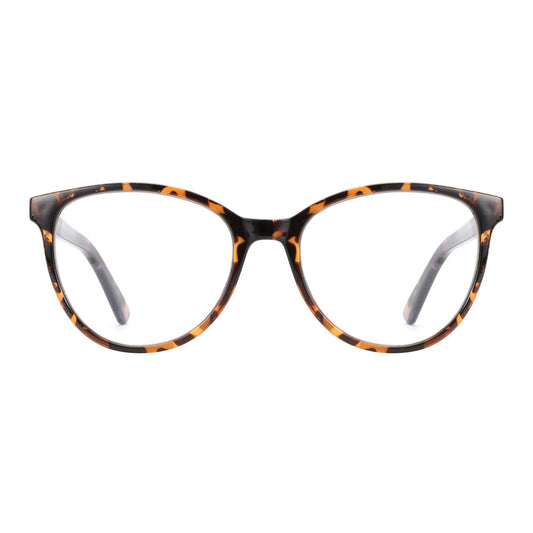
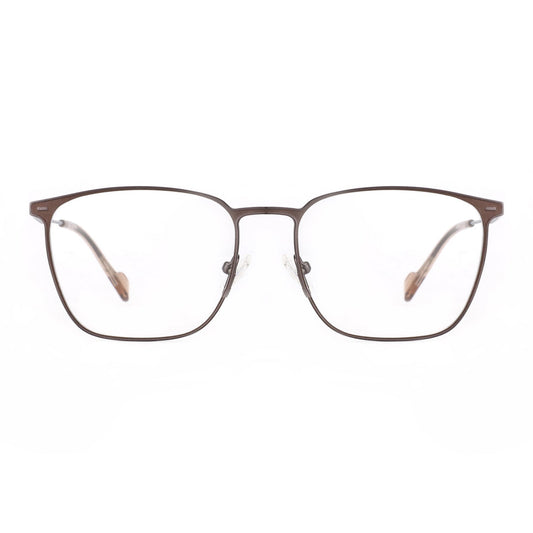
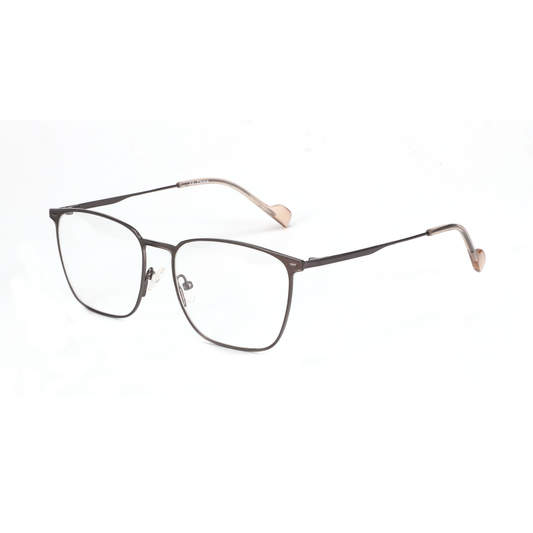
For men seeking durable everyday options, consider the Zenottic Eyeglasses Werner or the full-rim Zenottic Eyeglasses Thomas, both designed to support 1.74 lenses effectively.
Women and those wanting classic elegance may prefer the Zenottic Eyeglasses Daphne or the versatile Zenottic Eyeglasses Mamie. These frames help keep lens edges manageable while maintaining style.
If you already own heavy glasses that slide, read our practical guide on How to Stop Heavy High-Prescription Glasses from Sliding Down Your Nose before buying new frames.
Fit, Measurements, and Online Ordering Best Practices
Correct lens positioning depends on precise measurements such as monocular PD and fitting location. Your pupillary distance helps lens makers place the optical center correctly.
Common regrets with online high-prescription orders include choosing oversized stylish frames that make even 1.74 lenses look bulky, inaccurate PD leading to decentration and distortion, or poor nose bridge fit causing sliding and discomfort.
Practical checklist before ordering:
- Measure your PD accurately (use a ruler and mirror method or a phone app with verification).
- Choose frame lens width under 52 mm for prescriptions stronger than -7.00 D.
- Verify the frame’s bridge width and nose pad adjustability match your face.
- Request minimum edge thickness and anti-reflective coatings to reduce glare and improve clarity.
- Confirm the lab uses modern digital surfacing for high-index lenses.
- Start with a return-friendly retailer so you can test fit in person.
Our dedicated guide How to Order High-Prescription Glasses Online Without Regrets walks through exact measurement steps and what to ask your supplier.
For those experiencing discomfort from contacts, many high myopes are switching to 1.74 glasses for reduced fatigue and better all-day wear. See why in Contact Lens Fatigue: Why High-Prescription Wearers Are Switching to 1.74 Glasses.
Coatings, Durability, and Long-Term Comfort
Impact resistance remains an important safety consideration for eyeglass lenses. Always choose lenses that meet current FDA and ANSI standards, especially for children or active lifestyles.
Anti-reflective coatings are nearly essential with high-index materials. They reduce glare, improve light transmission, and minimize the slight color fringing some users notice. Blue-light filtering or photochromic options can be added depending on your daily screen time and outdoor exposure.
Maintenance is straightforward: clean with microfiber cloths and approved solutions. High-index lenses are generally durable when properly coated, but avoid extreme temperature swings that could stress the material.
Health and comfort boundary statement: This article discusses lens thickness, weight, and setup factors that may affect perceived comfort. It does not constitute medical advice, diagnosis, or treatment. High prescriptions should be managed under the care of a qualified eye care professional. If you experience persistent eye strain, headaches, or discomfort, consult an optometrist or ophthalmologist.
Building Your Ideal High-Prescription Pair in 2026
The most successful purchases follow a clear sequence: select a properly sized frame first, then choose the lens index that matches your prescription and cosmetic goals, and finally double-check all measurements.
Browse the full Eyeglasses collection or the Best Selling Products to see frames already optimized for high prescriptions. Many support 1.74 high-index lenses at accessible prices, including current promotions such as 20% off any lenses.
For timeless styles, explore Acetate frames. Men can find tailored options in the Men Eyeglasses collection.
Additional style guidance is available in our complementary articles on Makeup for High Prescriptions: Flawless Looks Behind Lenses and The Best Frames for High Myopia and a Narrow Pupillary Distance (PD).
Final Checklist for Buying High-Prescription Glasses
- Confirm your prescription is recent and includes PD and any prism or astigmatism details.
- Prioritize smaller or full-rim frames for prescriptions over -6.00 D.
- Decide on 1.74 only after seeing how your chosen frame affects expected thickness.
- Request AR coating, edge polishing, and proper centering.
- Order from retailers with clear return policies for fit verification.
- Test wear time in different lighting and activities before committing long-term.
By focusing on these practical factors instead of chasing the absolute thinnest lens in isolation, most high myopes find glasses that look better, feel lighter, and deliver reliable vision without breaking the bank.
This article only discusses comfort and setup advice. It is not medical advice. Persistent discomfort or existing eye conditions require evaluation by a qualified professional.
High-prescription eyewear has improved dramatically. With the right combination of 1.74 high-index lenses, thoughtful frame selection, and accurate measurements, you can enjoy clear vision in glasses that feel and look far better than older thick-lens options.
