


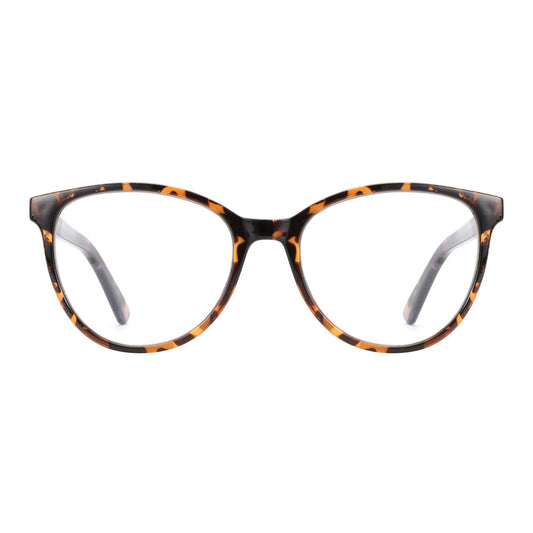

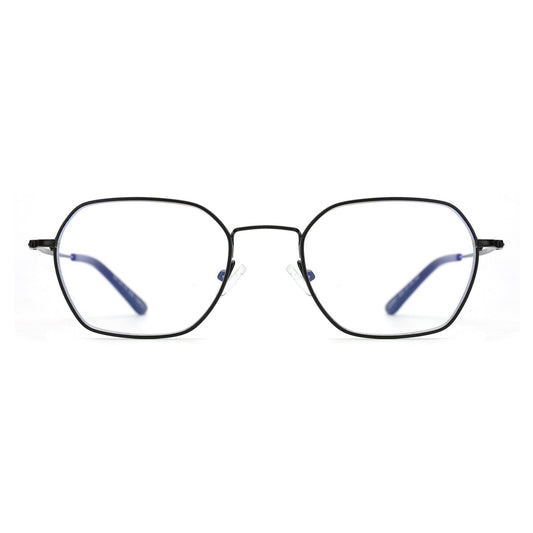

Aviator Prescription Glasses: Managing Lens Droop and Pupil Alignment in Teardrop Shapes
Whether a strong prescription works in aviator prescription glasses depends on your exact Rx, the specific frame's dimensions, and the lens options available for that frame, not on the aviator label alone. No universal cutoff exists that says a given power will or won't fit a teardrop shape.
Because of that, the more useful question is what information confirms a fit for your case. That starts with separating three things this article treats separately: whether the lens can physically be made for the frame, how the pupils line up with the optical centers, and whether the frame slips or droops on your face.
Can Strong Prescriptions Work in Aviator Glasses?
Strong prescriptions can work in aviator frames, but there is no universal prescription cutoff; lab makeability depends on checking your exact numbers against the frame dimensions. An approximate thickness estimate tells you what a lens might look like; it is not a lab acceptance or fit verdict.
The frame's DBC measurement compared with your pupillary distance (PD) sets how much decentration a lens needs, and a bigger difference between the two calls for more decentration, which can add to lens thickness depending on your prescription, according to The Eyecare Provider's Basic Dispensing Guide. That relationship applies to any frame shape, aviator included, so it is a useful check regardless of style.
Before asking whether a specific pair will work, have your current prescription, your measured PD, and the frame's eyesize and bridge measurements ready. Our frame selection for strong prescriptions guide walks through how those numbers narrow down frame choices before you commit to a shape.
Alignment in Teardrop-Shaped Aviators
The available evidence does not show that a teardrop lower lobe creates a distinct pupil-alignment problem compared with other aviator shapes. What is established is more general: accurate PD and the chosen frame's size and adjustment determine where the optical center lands, and a poorly adjusted or mis-sized frame can shift that placement even when PD was measured correctly, per research on pupillary distance and the optical centre.
That means a teardrop lens is positioned the same way any lens is: by measuring your PD and fitting height against the actual frame in front of you, not by assuming the lower lobe behaves differently from a rounder or squarer aviator. If you're comparing frame width options against your own PD, our guide on matching PD to frame size covers how that measurement interacts with frame width generally.
An online thickness calculator can estimate results once you enter your prescription, PD, and the frame's eyesize and bridge, but it does not verify optical-center placement. Treat it as a planning input, not confirmation that a teardrop shape aligns correctly for your eyes.
Lens Weight, Fit, and Frame Droop
Downward movement of a frame and misaligned optical centers are two different problems, and nothing in the available evidence ties aviator geometry or lens weight to frame slippage. Treat sliding or drooping glasses as a fit issue to check separately from the alignment discussion above.
Training material on frame adjustments identifies temple pressure and how the temples sit behind the ears as the checks to run when glasses slip down, without pointing to lens weight or a particular frame shape as the cause. If your aviators move, those two points are where an optician starts, not the lens index you chose or the frame's style name.

Comparing 1.50, 1.67, and 1.74
Only two specific comparisons are supported here: our 1.67 lenses are described as thinner than 1.60, and our 1.74 lenses are described as thinner than our 1.67 option, both for strong prescriptions. Neither a comparison against 1.50 nor a weight difference between any of the three indices is established by the information available.
| Index | Supported thickness statement | Weight evidence |
|---|---|---|
| 1.50 | Not established in comparison to 1.67 or 1.74 | Not established |
| 1.67 index | Described as thinner than 1.60 for strong prescriptions | Not established |
| 1.74 index | Described as thinner than 1.67 for strong prescriptions | Not established |
These are our own product descriptions, not an independent material comparison across brands or a claim that either index is required for aviator frames. If you want a closer estimate for your own prescription, our 1.67 High-Index and 1.74 Super High-Index pages list current specifications, and our lens thickness calculator guide explains how to run the numbers before choosing.
Compare Actual Teardrop and Modified-Square Frames
Comparing a teardrop and a modified-square aviator means testing the same prescription against each frame's actual measurements, not picking a shape based on its name. Follow these steps with real numbers from both candidates:
- Use the same prescription and lens material for both frames so the frame itself is the only variable that changes.
- Enter each candidate frame's actual eyesize and bridge, plus your measured interpupillary distance, into a lens thickness calculator for an approximate estimate.
- Compare the two approximate results side by side, keeping in mind that actual thickness can vary from the estimate depending on the specific lens and frame.
- Confirm frame-specific manufacturability and fit with an optician before ordering; the estimate does not certify that either lens can be produced for that frame or that its optical center will land correctly.

A bigger gap between a frame's DBC and your PD calls for more decentration and can affect thickness regardless of whether the frame is a teardrop or a modified square, so this process applies evenly to both shapes rather than favoring one. If you want to browse frame options while you gather these measurements, explore our prescription eyeglasses frames to see both aviator profiles.
FAQs
Does a higher lens index guarantee less weight in aviator frames?
No. While 1.67 and 1.74 lenses are designed to be thinner than lower-index alternatives, they do not guarantee a specific weight reduction. A thinner lens does not automatically mean a lighter finished pair, since frame material and lens size also factor in.
What does an online lens thickness estimate not confirm before I order?
A thickness calculator gives an approximate center and edge thickness based on the prescription, PD, frame eyesize, bridge, and material you enter, but the tool itself notes that actual thickness can vary by lens and frame style. It does not confirm that a lens can be manufactured for your specific frame or that your optical centers will be positioned correctly.
What measurements should I have ready before comparing two aviator styles?
Bring your current prescription, your measured interpupillary distance, and the eyesize and bridge measurements of each candidate frame. Those four numbers let you generate comparable thickness estimates and give an optician what they need to confirm fit and manufacturability.
Can a lens thickness calculator replace an in-person fitting?
No. It is useful for narrowing down frame and index options before you shop, but it does not check optical-center alignment or verify that a lab can produce the lens for your chosen frame. Treat it as a planning step that precedes, not replaces, frame-specific confirmation.
