



Choosing the Right Frame Shapes to Hide Thick High-Index Lenses
Many people find that even after spending a lot of money on High index lenses, the finished glasses still look thicker than expected or make their eyes appear smaller. While lens technology has come a long way, the frames you choose play a massive role in the final look. By picking specific shapes and materials, you can significantly hide lens thickness and end up with a pair of glasses you actually enjoy wearing.
Why Strong Prescriptions Result in Thicker Edges
If you are nearsighted (myopia), your lenses are "minus" lenses. These are thin in the center and become progressively thicker as you move toward the outer edges. The stronger your prescription—measured in diopters—the steeper the curve of the glass must be to bend light correctly.
When a lab makes Glasses for strong prescription needs, they start with a large circular lens "blank." Your prescription is ground into that blank. Because the thickness increases toward the rim, the wider the frame is, the more of that thick outer edge remains after the lens is cut to fit. This is why a lens might look thin in the lab but look like a "coke bottle" once it is placed into a large frame. The diopter strength directly dictates that curvature, and unless you choose a frame that cuts off those outer edges, the thickness will be visible.

The Advantage of Acetate Rims in Concealing Lens Thickness
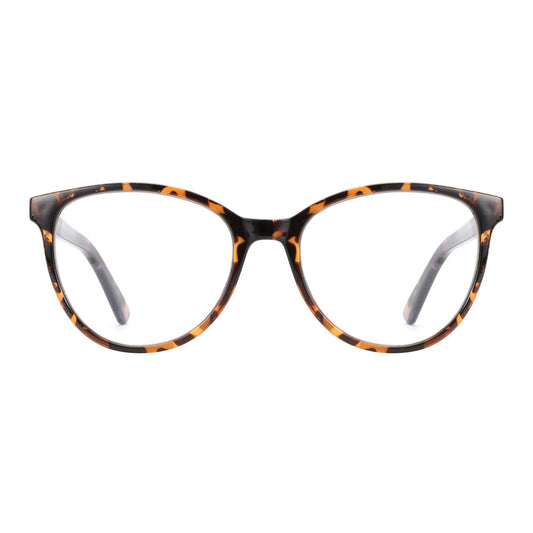
When comparing Acetate frames vs metal frames, acetate is almost always the winner for high prescriptions. Acetate is a type of high-quality plastic that is naturally much thicker than a thin titanium or stainless steel wire. This physical depth is your best friend because it acts as a "wall" that surrounds the lens.
If you have a lens that is 6mm thick at the edge and you put it in a thin metal frame, 4mm of that lens will stick out past the front and back of the wire. However, a bold acetate frame can often swallow that 6mm entirely. Using bold plastic borders helps mask the exposed lens edge, preventing that "frosted" or white ring look that occurs when the edge of the lens is visible from the side. Additionally, acetate is great for counterbalancing the front weight of heavy lenses. Since strong prescriptions add weight to the front of the glasses, a sturdier acetate frame provides better stability and prevents the glasses from sliding down your nose constantly.
Why Smaller Lens Widths Create a Thinner Profile
The most effective way to get thinner lenses is actually not the material, but the size of the frame. In the optical world, we look at the "A" measurement, which is the horizontal width of the lens. Because minus lenses get thicker as they go outward, reducing the surface area by choosing a smaller lens width allows the lab to cut away the thickest outer parts of the lens blank.
Many people fall into the trap of wanting oversized glasses frames because they are trendy. However, oversized frames are often the enemy of high prescriptions. Even with the highest index material available, a lens in a 55mm wide frame will look significantly thicker than the exact same lens in a 47mm wide frame. By keeping the lens width small, you ensure that only the thinnest, central portion of the lens is used in your finished eyewear.

Select Round and Oval Shapes to Minimize Edge Distortion
Shape matters just as much as size. When you look at the Best frame shapes for high prescriptions, you will notice a trend toward round, oval, and softened "P3" shapes. This is due to basic geometry. In a rectangular or square frame, the distance from the optical center to the sharp corners is much farther than the distance to the top or bottom edges.
These sharp corners in rectangular frames maximize thickness because they reach further out into the thickest part of the lens blank. A round or oval frame, however, maintains a more uniform distance from the center to the edge. This results in a more consistent edge thickness all the way around the rim. Beyond just the thickness, rounded edges also help minimize the "cut-in" effect where the side of your face appears shifted when seen through the lens. This geometric advantage is why most opticians will steer you away from sharp, angular styles if your prescription is over -5.00.
Pair the Right Frames with High-Index Lens Technology
Once you have picked a small, round acetate frame, the next step is choosing the material. Standard plastic or polycarbonate lenses are often too bulky for strong corrections. High index lenses are made from materials that bend light more efficiently than standard plastic. This means the lens can be physically flatter and thinner while providing the same corrective power.
Most people with high prescriptions look at 1.67 or 1.74 index materials. These materials are also typically "aspheric," meaning they have a flatter curve on the front. This is crucial for reducing the "tiny eyes" magnification effect. When you have a very strong minus prescription, the lenses act like a reverse magnifying glass, making your eyes look smaller to people looking at you. Pairing a high-index material with a small frame reduces this distortion, giving you a much more natural appearance.
The Pitfalls of Wire and Rimless Styles for Strong Correction
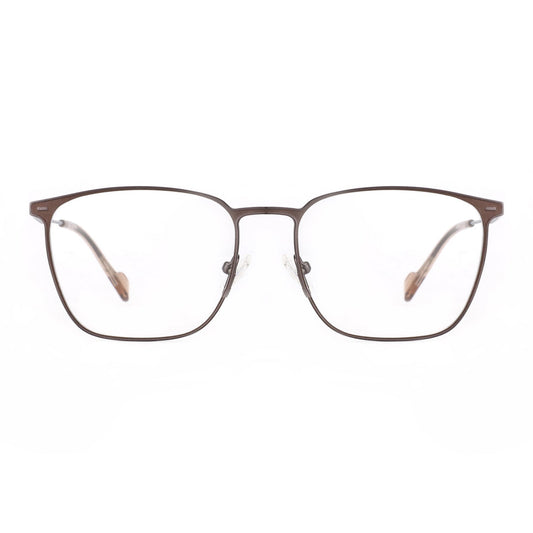
It can be tempting to go for a minimalist look with rimless or thin wire frames, but these are rarely successful for Thick eyeglass lenses. In a rimless design, there is no frame at all to hide the edge. This leaves the unpolished lens edge fully exposed to anyone looking at you from the side. It also creates a lot of internal reflections, making the "power rings" in the lenses much more noticeable.
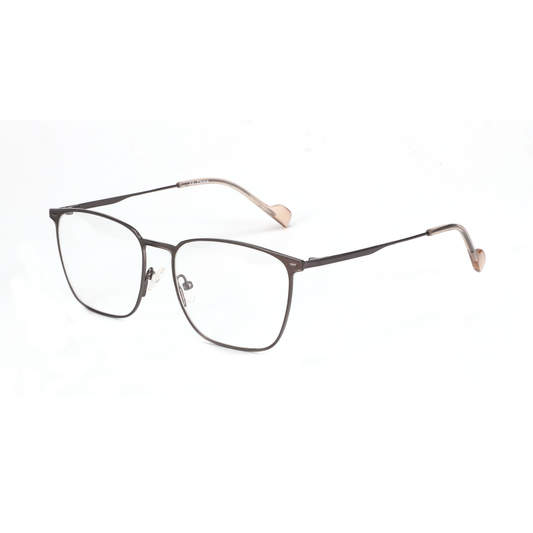
There are also structural risks to consider. High-index materials can be more brittle than standard polycarbonate. In rimless styles, the lab must drill holes directly through the lens to attach the bridge and temples. If the lens is very thick, it places a lot of stress on those drill points, which can lead to cracking. Thin metal wires also struggle to support the front-heavy weight of a strong prescription, often leading to a fit that feels flimsy or unbalanced. If you really want metal, look for "thick-rimmed" metal frames specifically designed for high-power prescriptions.
The Importance of Pupillary Alignment in Frame Selection
Ideally, you want your pupils to sit as close to the horizontal center of each lens as possible. This is related to your Pupillary Distance (PD). If you pick a frame that is too wide for your face, your eyes will sit closer to the bridge (the nose area) rather than the center.
When your eyes are not centered, the optician must perform "decentration." This means they move the optical center of the lens to line up with your eye. While this ensures you can see clearly, it adds unnecessary bulk to the temporal (outer) edge of the lens. To avoid this, try to find a frame where the "Frame PD" (Lens width + Bridge width) is close to your actual PD. Centering your eyes in the Best frame shapes for high prescriptions is the "secret" to getting the thinnest result possible.
Finishing Touches That Reduce the Appearance of Thickness
Even after the lenses are cut, there are lab techniques that can help. One is the "roll and polish." This involves grinding down the sharp back edge of the lens and polishing it to a clear finish. This can help make the edges look transparent and less like a thick white wall. However, be careful with a full high polish, as it can sometimes increase internal reflections or "glare" inside the lens.
Another essential feature is a high-quality anti-reflective (AR) coating. Thick eyeglass lenses naturally reflect a lot of light, which creates those concentric "power rings" that make the prescription look stronger than it is. An AR coating allows more light to pass through the lens rather than bouncing off it, which significantly minimizes these rings and makes the lenses look almost invisible to others.

Balance Aesthetic Appeal with Optical Functionality
Picking Glasses for strong prescription needs is about compromise. You have to prioritize the frame fit and lens physics without completely sacrificing your personal style. Before you buy, go through a final checklist: Is the lens width under 50mm? Is the bridge narrow enough to keep the glasses from sliding? Are the rims thick enough to hide the lens?
Remember that the goal is a balance between how you see and how you look. By following these geometric and material rules, you can find glasses frames that look stylish while keeping your lenses as thin and light as possible. Modern optics offer more choices than ever, so you no longer have to settle for heavy, unsightly eyewear just because you have a strong correction. Finding a frame that fits your face and your lens needs is the best way to ensure long-term comfort and confidence in your vision.
Selecting the right eyewear doesn't have to be a guessing game if you stick to smaller, rounded acetate styles. These choices work with the physics of your lenses to hide thickness and reduce distortion. By combining a smart frame choice with high-index materials and proper centering, you can achieve a look that is both functionally clear and aesthetically thin. Comfort and style are possible even with a strong prescription when you know which features to look for.
