



How to Choose Glasses Without Relying on Face-Shape Rules
You don't need a face-shape chart to choose glasses. Use three checks in order: drop frames that feel uncomfortable, compare how big and bold each remaining frame looks on you, and then pick the shape you like looking at most.
Face-shape rules can still work as a quick styling shortcut if you enjoy them. They're optional, though, and you can build a solid shortlist without ever deciding whether your face is "oval" or "square."
A Simple Order for Choosing Glasses Without a Face-Shape Chart
Each step narrows the field before the next one, so you spend your attention on frames that could actually work.
- Screen for comfort and fit. Set aside any frame that pinches, presses, or slides around. A frame you love on the shelf isn't a win if you don't want to keep it on.
- Compare scale against your own features. Look at how wide and how visually heavy each frame looks on your face. Judge it against frames you've liked or disliked before, not against a fixed proportion.
- Choose the shape whose effect you prefer. Among the frames left, compare silhouettes by what they emphasize or soften. Pick the one that looks most like you.

This order keeps the final call in your hands. A chart can suggest shapes to try, but comfort and your own taste decide what stays on the list.
Start With Comfort and Fit
Before you judge style, notice how the frame feels and whether it stays put. These are your own shortlist observations, not a technical fitting test, so trust what you notice in the first few minutes.
- Nose pressure: Do you feel a pressure spot on the bridge of your nose or a mark you keep thinking about?
- Pinching behind the ears: Do the arms squeeze or dig in where they curve down? Our guide to temple length fit explains how arm length connects to slipping and pinching.
- Slipping: Does the frame slide down when you look at the floor, nod, or smile? Repeated pushing back is a sign to reconsider.
- Heaviness in one spot: Does the frame feel front-heavy or tiring on your nose? Two frames can weigh the same and still feel different, which is why frame weight comfort depends on where that weight sits.
- The keep-it-on test: Would you happily forget you're wearing it? If you're already looking forward to taking it off, move on.
If a frame fails one of these checks, set it aside before you think about how it looks. That keeps a great-looking but uncomfortable option from winning on appearance alone.
Compare Frame Scale Without Looking for One Correct Proportion
Scale is about how much visual space a frame takes up on your face. There's no single right size for everyone, so compare options against your own features and your own taste instead of a ratio.
- Overall width: Does the frame look wider or narrower than you expected? Does that feel balanced to you, or does it pull your attention to the edges?
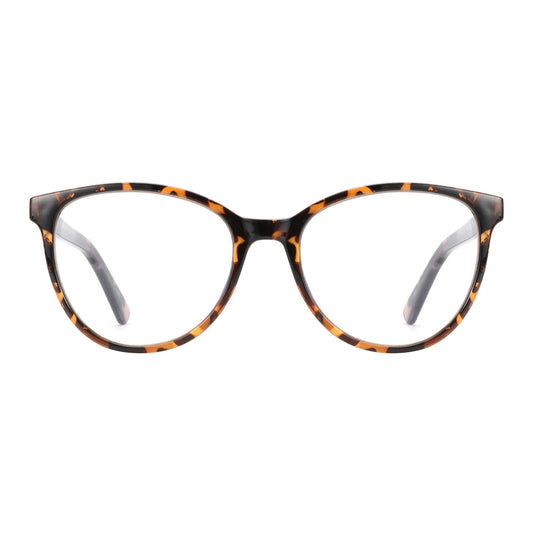
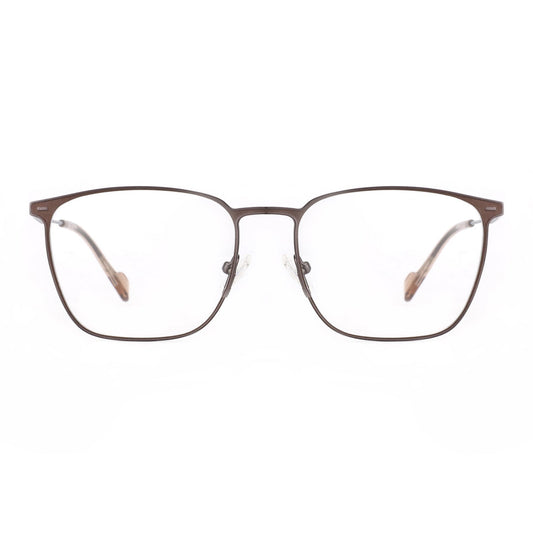
- Visual weight: Thick, dark rims read as bold. Thin metal or clear frames read as quieter. Decide how much you want the frame to stand out.
- Side-by-side comparison: Try two frames of different sizes one after the other, or take a photo in each. Small differences are easier to see back to back than from memory.
- Past favorites and misses: Think about a pair you loved and one you never wore. Was the one you skipped too bold, too small, or too large for your taste? Use that as your reference point.
Treat scale as a preference, not a pass or fail test. Someone else with similar features may happily choose a bigger or smaller frame than you would.
Choose a Shape for the Visual Effect You Prefer
Once comfort and scale have narrowed your list, compare shapes by the look they create rather than the category a chart puts you in. Try a few clearly different silhouettes, such as a rounded frame, an angular one, and one with lifted outer corners, so the contrast is easy to judge.
Then ask simple questions about each one. Does this shape echo your features or contrast with them? Where does your eye land first: the frame, your eyes, or your brows? Does it make you look sharper, softer, more playful, or more polished? There are no wrong answers here, and the same shape can read differently from one person to the next. You can compare frame shapes side by side in photos to spot which silhouettes catch your eye. If you'd like a vocabulary for the mood you're after, our guide to eyewear aesthetics groups styles by overall vibe instead of face type.
If a face-shape chart points you toward a shape you also like, great. If it rules out a frame you love, your own reaction counts for more than the chart.
Use Different Checks in Person and Online
In-person try-ons and online browsing give you different kinds of information. An OpticianWorks consumer guide notes that fit matters for comfort and appearance, and it recommends trying frames on to judge fit and appearance. Online, you're working from photos and listed numbers, so the goal shifts to building a smart shortlist.

| Setting | What you can assess | Useful action | What it can't tell you |
|---|---|---|---|
| Trying on in person | Comfort, stability, and appearance on your face | Run the comfort checks, then compare frames back to back | How the frame feels after a full day |
| Comparing online | Shape, color, and scale in photos; listed dimensions | Check exact listed sizes against a pair that already feels good | How the frame will actually feel or fit |
Online, the most useful anchor is a pair you already find comfortable. If your current frames have measurements printed on the inside of an arm, compare them with the exact dimensions listed for each item you're considering. When you browse our eyeglass frames, use those listed numbers to narrow the field. A close match helps you shortlist, but it isn't a fit guarantee, because frame materials, nose pads, and arm curves also change how glasses feel.
FAQs
Should I ignore face-shape advice completely?
No. Face-shape charts can be a useful starting point for ideas, especially if you're not sure which shapes to try. Just treat them as suggestions. Comfort, scale, and your own reaction to a frame are what should make the final call.
How many frames should I compare before deciding?
There's no set number. What matters more is variety: include at least a few clearly different shapes and sizes, even ones you don't expect to like. Contrast makes your preferences easier to spot, and a surprise favorite sometimes shows up that way.
What if two frames pass every check and I still can't choose?
Take a photo in each from the front and at an angle, then look at them later with fresh eyes. You can also ask someone whose taste you trust which one looks more like you. If they're still tied, go with the one you're more excited to wear every day.
Is it okay to choose a frame that looks bold or unexpected on me?
Yes, as long as it's comfortable and you enjoy how it looks. Choosing glasses is personal, and a frame that stands out can be exactly the right pick if that's the look you want.
