


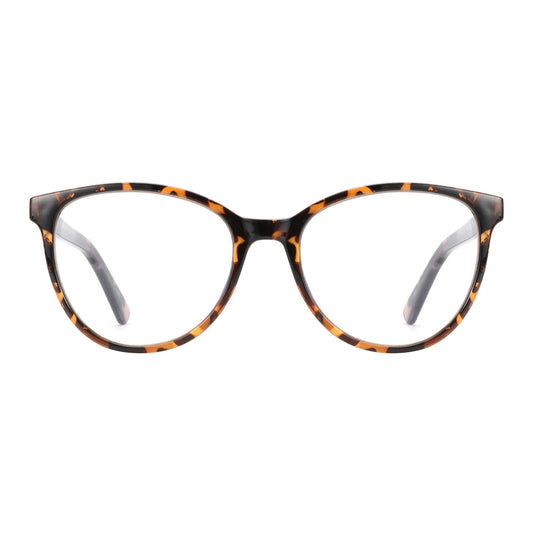

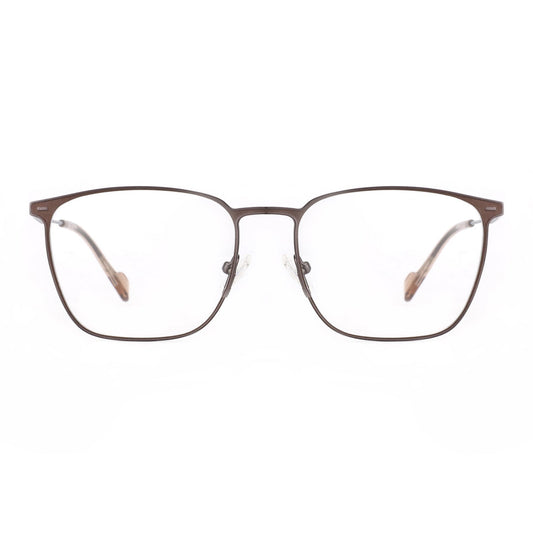
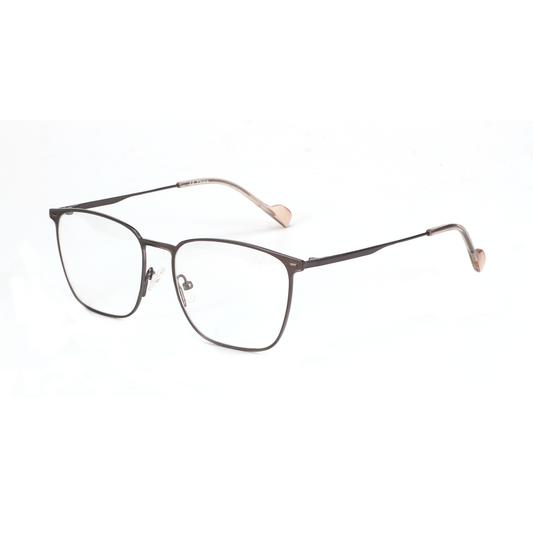
Do All Eyeglass Frames Work With Prescription Lenses?
No. You shouldn't assume any frame works with every prescription and every lens setup, even if it looks like an ordinary pair of glasses. Fit depends on four things together: how the frame holds the lens, the frame's size and shape, your eye measurements, and the lenses you want.
A better question is whether a frame can take your lenses. To find out, have the exact frame reviewed with your prescription before you order.
No: Not Every Frame Fits Every Prescription Setup
Eyeglass frame compatibility is about a specific match, not a general yes. Two frames can look almost the same and still handle lenses very differently. So a frame's looks alone can't tell you whether your lenses will work in it.
Strong prescriptions show this clearly. A "minus" prescription corrects nearsightedness, and higher-minus lenses get thicker toward the edges. An optical mounting guide notes that thick edges from higher-minus prescriptions can be a problem, and in some small rimless frames they can make drill placement difficult. Rimless lenses are drilled so the frame hardware can attach to them, which means the lens edge does structural work.
That example is narrow. It applies to some small rimless frames. It doesn't mean rimless frames can't take prescriptions, and it doesn't set a prescription number where problems start. What it shows is that one frame design and one prescription can create a limit that neither would have on its own. The next step is to see how each frame type holds its lenses.
How Frame Construction Affects Lens Fit
Each frame type holds the lens in a different way, and that changes what the lens edge has to do. The same optical guide describes the three frame mounting methods like this:
| Construction | How the lens is held | What it tells you |
|---|---|---|
| Full-rim | Lens sits in a groove inside the eyewire | Rim surrounds the whole lens edge |
| Semi-rimless | Partial rim plus a tensioned nylon cord | Part of the lens edge is exposed |
| Rimless | Bridge and temples attach directly to the lens | The lens carries the frame hardware |

The table explains the mechanism, but it doesn't settle eyeglass frame compatibility for a given pair. A full-rim frame still needs a lens edge that matches its groove. Our guide to checking lens bevel fit explains what happens in metal wire rims when that match is off. With a semi-rimless frame, the cord and partial rim have to hold a lens whose bottom edge is open. With a rimless frame, the lens itself has to support the drilled hardware.
So when you compare semi-rimless glasses with rimless glasses, the style tells you how the lens will be held. It doesn't tell you whether your prescription and lens choice suit that particular model.
How Frame Size, Shape, and Prescription Work Together
Size and shape matter for two separate reasons. Size affects where the lens's optical center lands in front of your eye. Shape affects how thick the lens edge looks.
First, alignment. Your pupillary distance (PD) is the distance between the centers of your pupils. The optical center is the point on the lens you're meant to look through. An optical-fitting review explains that frame size and PD work together. A frame that is too large, too small, or poorly adjusted can contribute to optical-center misalignment even when your PD was measured correctly. In practice, an accurate PD alone isn't enough. The frame has to suit your face and measurements as well.
Second, thickness. A "plus" prescription corrects farsightedness and makes lenses thicker toward the center. An optical-trade article on lens shape and power gives a few examples. A narrow vertical opening can show more edge thickness in some high-plus cases. Narrower or oval shapes can reduce edge thickness in some high-minus cases. Our posts on high-index frame choices and plus lens thickness by frame size go into these trade-offs in more detail.
These examples are not universal rules. They don't decide whether a particular frame will work with your lenses. Treat them as the factors to raise when you have a specific frame checked.
How to Check a Specific Frame Before Ordering Lenses
The check is the same for a new frame and one you already own. With a new frame, you provide the product details. With your own frame, you provide the frame itself or the details printed on it.
- Identify the exact frame. For a new frame, note the brand, model name or number, color code, and the listed measurements. If you're comparing options in our eyeglasses collection, write down the model and its measurements before you go further. For a frame you own, have it in hand or copy the numbers printed inside the temple arm.
- Share your current prescription and PD. Use your latest prescription, not the one from your old lenses.
- State the lens setup you want. Say whether you want single vision or a multifocal design, plus any lens material or index you've already picked. Progressives have their own fitting needs, which our progressive lens fitting guide covers.
- Ask the lens provider to assess that exact combination. Do this before you buy the frame or send in a frame you own. Services differ between providers, so first confirm they work with your type of frame. For a rimless frame, ask about drill placement directly.
- Get a specific answer. You want a clear yes or no for that frame, prescription, and lens setup, plus any limits. A general "that style usually works" isn't an answer.

If the provider flags a limit, decide before you order. You can change the lens choice they suggest, or you can pick a different frame and run the same check on it.
FAQs
Are rimless frames a bad choice for a strong prescription?
Not automatically. The concern in the optical guide covers some small rimless frames with higher-minus prescriptions, where thick lens edges can make drilling harder. Some rimless styles can still work with a high prescription. Our article on rimless glasses with high prescriptions looks at that choice. Ask about drill placement for the specific model.
If my old lenses fit this frame, will new lenses fit too?
Not necessarily. A new prescription, a different lens design, or a different material can change lens thickness and where the optical center needs to sit. Have the frame checked again with your current prescription and the lenses you plan to order.
Does "prescription-ready" mean a frame takes any lens?
No. The label means the frame is designed to hold prescription lenses in general. It doesn't confirm that your power, PD, and lens choice will work in that model. You still need the exact-frame check.
Where can I find my frame's measurements?
Many frames have numbers printed on the inside of a temple arm. These usually list lens width, bridge width, and temple length in millimeters, often with a model number. Give these numbers to the lens provider if you can't send the frame.
