




Adjusting Metal Nose Pads at Home: Fixing Uneven Glasses Sit and Cheek Contact
Metal eyeglass frames with separate, adjustable nose pads can sometimes be reshaped at home, but the available guidance covers specific symptoms rather than every cheek-contact or uneven-fit problem. On frames with true pad arms, bending the arm outward, away from the lens, lowers the pad and raises the frame; bending it inward, toward the lens, raises the pad and lowers the frame, according to pad-height adjustment guidance.

That direction-and-height relationship is the closest documented match to lifting a frame off the cheeks or leveling one side against the other. It does not cover every metal frame design, and it stops short of a guaranteed fix for cheek contact specifically, so treat the steps below as a starting point rather than a universal repair.
Adjust Metal Nose Pads for Cheek Contact and Uneven Fit
A metal nose pad adjustment only works on frames built with movable pad arms and separate silicone or acrylic pads, such as those found on prescription frames and lenses. The next three checks tell you whether your glasses qualify and how to move without damaging the joint.
Confirm the Adjustment Is in Scope
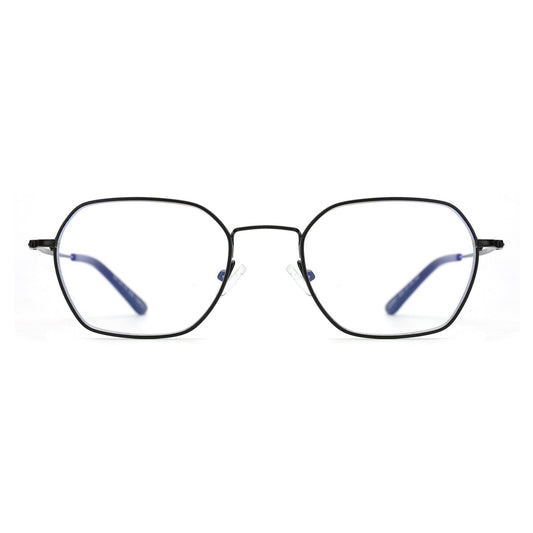
Look at where the pad meets the frame. If you see a thin metal arm connecting the pad to the bridge, and the pad tilts slightly when you press it, the frame likely has adjustable pads. Molded bridges common on standard acetate eyeglasses, or pads glued flat with no visible arm, are not built for this movement. Pushing on a fixed pad risks cracking the bridge instead of correcting the fit, so skip the rest of this method on those frames.
Support the Frame Before Moving a Pad
Hold the glasses by the bridge, the piece between the two lenses, rather than by one temple arm or lens edge. All About Vision's guidance describes wrapping the lens in a soft cloth and gripping one nose pad between your thumb and forefinger while the other hand steadies the bridge, which keeps the twisting force at the pad instead of pulling on the far side of the frame (adjust nose pads on glasses). Move only one pad arm at a time and check the fit before touching the second side, similar to the pacing outlined in our glasses adjustment guide.
Make the Adjustment and Reassess
Work in small increments and try the glasses on after each change instead of bending both sides at once.
- Identify the symptom. If the frame sits low and the cheeks feel crowded, that matches the guidance for glasses sitting too low; if the glasses slide down your nose, that matches the slipping-fit guidance. These are two different starting points, so don't apply the same bend to both.
- Bend one pad arm outward (away from the lens) for a low-sitting frame. This is described as lowering the pad and raising the frame, which can create more room near the cheekbone.
- Bend one pad arm inward (toward the lens) only if the frame is riding too high or feels tight, since this is described as raising the pad and lowering the frame instead.
- Repeat the same direction and roughly the same amount on the opposite pad arm. Hold the glasses at eye level and compare the two pads side by side; uneven spacing here is a likely source of a lopsided sit.
- Put the glasses on and check both cheeks and both ears. Make small follow-up corrections one side at a time rather than repeating a large bend, since the sources caution against bending the same arm back and forth repeatedly.

Check Whether the Adjustment Improved Cheek Clearance and Level Fit
Treat cheek clearance and level sit as two separate pass/fail checks, not one combined impression. First, look in a mirror or ask someone to check whether both cheeks now clear the frame front when you smile or talk; contact on only one side usually means that pad arm needs another small adjustment in the same direction as before.
Second, hold the glasses up at eye level, the way you compared the pads earlier, and confirm the frame front sits parallel to your eyebrows rather than tilted toward one ear. If the frame still tilts, recheck that both pad arms moved by the same amount, since an uneven bend on one side is a common source of a crooked sit. If either check keeps failing after two or three careful rounds, stop adjusting and move to the next section instead of forcing a bigger bend.
When to Stop and Get Frame-Specific Help
Stop immediately if a pad arm feels stiff, grinds, or resists light pressure, or if you notice a gap, discoloration, or looseness at the solder joint where the arm meets the frame front. None of the adjustment guidance above establishes a way to bend a damaged or resistant joint without risking a full break, so continued force at that point is the sign to hand the frame to someone else rather than a sign to push harder.
The same applies if cheek contact or an uneven sit persists after several careful adjustments on both sides. At that point, the mismatch may come from the temple arms, frame width, or an underlying prescription fit issue rather than the nose pads alone, and a fitter can check those factors together. Our crooked-frame fit guide covers a broader look at frame-wide alignment if the problem seems to extend past the pads. When you need a fitting done in person, FindClarity's optician directory lets you search by state for a provider who adjusts and repairs eyeglasses; confirm services and pricing directly with whoever you contact, since a directory listing does not guarantee any specific outcome.
FAQs
Do I need special pliers for a metal nose pad adjustment, or can I use my fingers?
Neither tool is required for every frame. All About Vision's guidance describes making these changes by hand, gripping the pad between your thumb and forefinger for small moves, with nose pad pliers listed only as an optional aid for finer control. If a pad arm won't move with light finger pressure, that resistance is a sign to stop rather than a reason to switch to pliers and push harder.
Which way do I bend the pad arms to lift glasses off my cheeks?
Bending the pad arms outward and away from the lenses lowers the pads relative to the bridge, which elevates the frame front. Moving both pads outward by small, equal amounts raises the bottom of the eye wire away from your cheekbones.
Why are my glasses still crooked after adjusting the nose pads?
If adjusting the pads does not level the frame, the uneven fit often stems from misaligned temples or uneven ears rather than the nose pads alone. Bending a single pad arm back and forth repeatedly risks weakening the solder joint, so stop adjusting the pads and evaluate overall frame alignment or visit an optician.
